

Stock Region Market Briefing: After the Close - Sunday, October 5, 2025
The stocks featured in this report were previously delivered in our trading room in real-time. To access Stock Region’s real-time trade ideas, then be sure to purchase a membership now.

Disclaimer: This newsletter is for informational and entertainment purposes only. The content provided herein represents the opinions of Stock Region and should not be construed as financial, investment, legal, or tax advice. The stock market is inherently risky, and any investment decisions you make are solely your own responsibility. We are not registered financial advisors. Before making any financial decisions, you should consult with a qualified professional. Past performance is not indicative of future results. All information is provided “as is” without warranty of any kind. Stock Region will not be liable for any losses or damages arising from the use of this information.
The Big Picture: A Market of Two Minds
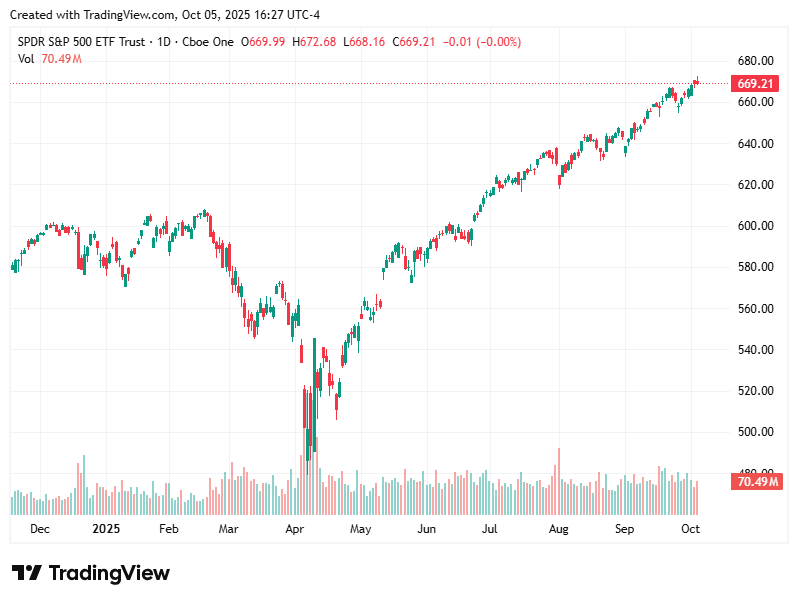
What a dizzying, perplexing, and ultimately fascinating end to the week. Friday, October 3rd, 2025, will be remembered not as a day of clean victories, but as a day of fractured narratives. On one hand, we witnessed the Dow Jones Industrial Average and the S&P 500 brush up against, and even set, new all-time highs. The air crackled with the energy of a bull market that simply refuses to quit. On the other hand, a late-session stumble in the tech darlings that have carried us for so long sent the Nasdaq into the red, a stark reminder that no tree grows to the sky.
The market closed like a split-decision boxing match. The Dow Jones Industrial Average punched higher, closing at a record 46,758, up a solid 0.51%. The S&P 500, after touching its own zenith, ended the day virtually unchanged at 6,716, a mere +0.01% gain. But the tech-heavy Nasdaq Composite told a different story, slipping -0.28% to close at 22,781.
What does this tell us? It signals a crucial, and perhaps healthy, rotation is underway. Investors, finally looking beyond the glittering allure of mega-cap growth stocks, are finding new dance partners. The S&P 500 Equal Weighted Index, which gives every company the same influence regardless of size, outperformed its market-cap-weighted cousin, gaining a respectable +0.4%. This is the market’s way of saying, “Hey, there’s more to this party than just the handful of names everyone talks about.” Small-caps, as measured by the Russell 2000, also got in on the action, climbing +0.7%.
Volume was notably higher than average, which tells me there was real conviction behind these moves. This wasn’t just sleepy Friday trading; it was an active, decisive repositioning of capital. Advancers led decliners on both the NYSE and Nasdaq, reinforcing the idea that broad market health is improving even as the headline generals took a breather.
Adding to the drama was the ongoing government shutdown. In a bizarre twist, the very data we rely on to gauge the economy’s pulse—the September Employment Situation Report—was a no-show. We’re flying partially blind, yet the market, in its infinite and often irrational wisdom, seems unfazed. Fed officials are sending mixed signals, with Vice Chair Phillip Jefferson acknowledging pressure on both inflation and employment, while others caution against premature rate cuts. The market, however, is still pricing in cuts by year-end, bolstered by weaker private payroll data from earlier in the week. It’s a classic tug-of-war between Washington, the Fed, and Wall Street.
For the year, the numbers are still impressive:
Nasdaq Composite: +18.0% YTD
S&P 500: +14.2% YTD
Russell 2000: +11.0% YTD
DJIA: +9.9% YTD
S&P Mid Cap 400: +5.4% YTD
The question on everyone’s mind is whether this is the start of a broader, more sustainable rally, or just a momentary head-fake before the mega-caps reassert their dominance. Let’s dig deeper into the companies and sectors making moves.
Sector Spotlight: Healthcare’s Roaring Comeback & Tech’s Afternoon Tumble
Friday’s session painted a vivid picture of sector rotation in real-time. The winners and losers weren’t random; they told a story of shifting risk appetite and a renewed focus on value and stability.
The Week’s Undisputed Champion: Healthcare (+1.1% on Friday, +6.8% for the Week)
If you looked away from the healthcare sector for a moment, you missed a spectacular rally. It was the best-performing sector for the week by a country mile, and Friday’s +1.1% gain was the victory lap. The catalyst? A stunning pre-announcement from managed care giant Humana (HUM).
On Thursday, Humana did something few companies dare to do: it not only reaffirmed its 2025 earnings guidance but also gave an early look at its 2026 Medicare Advantage Star Ratings. The market went absolutely wild. The stock soared +10.56% on Friday alone, closing at $283.72. This wasn’t just a win for Humana; it was a shot of pure adrenaline for the entire managed care industry, which has been beaten down by concerns over rising medical costs and regulatory uncertainty.
The positive ripple effect lifted the entire HealthCare Providers ETF (IHF), which climbed +1.46%. This move in healthcare is significant because it’s traditionally a defensive sector. For it to lead the market with such aggressive buying suggests investors are seeking a blend of growth and stability. They want exposure to an aging demographic and inelastic demand, but they needed a sign that the coast was clear. Humana’s update was that sign—a massive, flashing, green light. This tells me that investors are willing to pay up for perceived safety and predictable earnings, a theme that could dominate the fourth quarter.
The Unsung Hero: Utilities (+1.2%)
Let’s be honest, nobody goes to a party to talk about utility stocks. They are the definition of “boring.” But on Friday, boring was beautiful. The utilities sector quietly became the day’s top performer, gaining +1.2%. What’s driving this? It’s a simple, classic story. When bond yields take a breather (the 10-year yield fell 7 basis points this week despite a small Friday bounce), dividend-paying stocks like utilities suddenly look a lot more attractive.
Investors are essentially saying, “If I can’t get a great yield from a ‘risk-free’ Treasury, I’ll look for a reliable dividend from a company that keeps the lights on.” The strength was incredibly broad, with nearly every component in the sector finishing in the green. This is another nod to the defensive rotation we’re witnessing. It’s a flight to quality and yield, and it signals a degree of caution creeping into the market’s mindset, even as the Dow hits new highs.
The Laggards: A Tale of Two Tumbles
Consumer Discretionary (-0.8%) & Communication Services (-0.6%)
Where did the money from healthcare and utilities come from? Look no further than the sectors that have been the market’s darlings for most of the year. The weakness was concentrated in the mega-cap names that dominate these sectors. The Vanguard Mega Cap Growth ETF (MGK) lost 0.4%, a clear sign that the big players were taking a hit. This wasn’t a panic; it was profit-taking. After an incredible run, investors are trimming their biggest winners and reallocating the cash into undervalued areas.
The underperformance of these sectors, especially on a day when the broader market was advancing, is the most important signal from Friday’s trade. It shows a market that is broadening out, looking for leadership beyond the usual suspects. This is a healthy development. A market rally built on the shoulders of just a few giants is inherently fragile. A rally built on a wide base of advancing sectors is far more durable.
Information Technology (-0.3%)
The tech sector started the day strong but rolled over in the afternoon, ultimately dragging the S&P 500 and Nasdaq down with it. The poster child for this reversal was Palantir Technologies (PLTR), which was the S&P 500’s biggest loser, plummeting -7.47% to close at $173.07.
The cause was a damning Reuters report alleging that the U.S. Army had flagged “fundamental security” flaws in a key battlefield communications program involving Palantir. For a company whose entire mystique is built on impenetrable, high-level government and defense work, this is a body blow. The market’s reaction was swift and brutal. PLTR has had a monstrous run, and its valuation is priced for perfection. Any news that casts doubt on its core competency, especially its relationship with the U.S. military, is going to cause a stampede for the exits. This is a story to watch closely, as it could have longer-term implications for the company’s lucrative defense contracts.
Even the king of tech, NVIDIA (NVDA), wasn’t immune. The stock fell -0.67% to $187.62. There was no negative news here; this was pure and simple profit-taking after a week of setting multiple record highs. It’s a healthy and expected pullback for a stock that has defied gravity all year.
Deep Dive: Individual Stock Stories You Can’t Miss
Beyond the sector-level drama, these individual companies made headlines that are shaping their futures and creating potential opportunities—or pitfalls—for investors.
AbbVie (ABBV): The Guidance Shockwave
Stock: AbbVie Inc. (ABBV)
Price: $233.91
Move: -$2.65 (-1.12%)
Just after 4:20 PM ET on Friday, pharmaceutical giant AbbVie (ABBV) dropped a bombshell on an unsuspecting market. The company announced it expects its third-quarter earnings to be walloped by a massive $2.7 billion pre-tax charge related to “acquired in-process research and development (IPR&D) and milestones expense.”
Let’s translate that from corporate jargon into plain English. AbbVie is essentially paying for research and development on drugs it recently acquired through collaborations or licensing deals. While this is a normal part of business for big pharma, the size and timing of this charge were a complete shock.
The result? A brutal downward revision of its earnings guidance.
New Q3 Adjusted EPS Guidance: $1.74 - $1.78
Previous Analyst Consensus: $3.26
New Full-Year 2025 Adjusted EPS Guidance: $10.38 - $10.58
Previous Analyst Consensus: $12.04
This isn’t just a guidance cut; it’s a guidance cliff-dive. The market’s reaction was surprisingly muted in after-hours trading, with the stock only down about 1%. But make no mistake, this is a significant development. The company is trying to soften the blow by classifying it as a non-GAAP adjustment, arguing it’s a one-time event related to strategic investments in its future pipeline. They even stated they don’t forecast these expenses because their timing is uncertain.
While the bulls will argue this is a non-cash charge that shores up AbbVie’s future beyond its flagship drug Humira, the bears will see a company’s earnings power being drastically reduced in the near term. The stock has had a phenomenal run, and this news gives investors a perfect excuse to take profits. The key question is whether this $2.7 billion investment will eventually pay off with a blockbuster drug. Pharma R&D is a high-stakes gamble. This could be the seed of the next multi-billion dollar franchise, or it could be money down the drain. For now, the uncertainty is a major headwind. I expect analysts to downgrade their price targets en masse next week. The stock is likely to face significant pressure, and its reputation for steady, predictable earnings has taken a hit.
LGI Homes (LGIH): A Mixed Bag in Housing
Stock: LGI Homes, Inc. (LGIH)
Price: $53.17
Move: +$0.89 (+1.70%)
Homebuilder LGI Homes (LGIH) reported its September and third-quarter home closings after the bell, and the numbers paint a complex picture of the housing market.
The company closed 354 homes in September and a total of 1,107 homes in the third quarter. On the surface, these numbers seem low compared to the boom times, reflecting a market that is still grappling with affordability issues and higher interest rates. The stock itself is down more than 50% from its 2021 highs, a testament to the brutal environment for builders.
However, there’s a fascinating and crucial detail hidden in the report: the inclusion of “single-family rental homes.” LGIH is not just building homes to sell to families; it’s also acting as a supplier for the burgeoning build-to-rent market. This is a savvy strategic pivot. As mortgage rates make homeownership a distant dream for many, the demand for high-quality rental homes is exploding. By selling blocks of homes directly to institutional investors or operating them as rentals, LGIH is tapping into a completely different, and arguably more stable, revenue stream.
LGI Homes is adapting to the new reality of the American housing market. The dream of a white picket fence is being replaced by the practicality of a long-term lease. While the overall closing numbers might not scream “growth,” the strategic shift towards single-family rentals is a brilliant move that de-risks their business model. The stock popped modestly on the news, but I believe the market is underestimating the long-term potential of this strategy. As long as affordability remains a challenge, the build-to-rent space will flourish, and LGIH is positioning itself perfectly. The company had 141 active selling communities as of September 30th, which shows it has the inventory to capitalize on demand, whether it comes from individual buyers or large-scale landlords. Keep an eye on their full earnings report on November 4th for more color on the profitability of this rental segment.
Better Home & Finance (BETR): Another C-Suite Shakeup
Stock: Better Home & Finance Holding Company (BETR)
Price: $60.20
Move: +$3.01 (+5.26%)
The revolving door in the C-suite at Better Home & Finance (BETR) continues to spin. The company announced that its Chief Financial Officer, Keven Ryan, is retiring to “pursue other opportunities.” This is often corporate-speak for a forced departure or a disagreement over strategy.
For a company like Better, which has been on a rollercoaster ride since its SPAC debut, leadership stability is paramount. The mortgage and finance space is incredibly challenging right now, and losing your CFO in the middle of it is not a good look. The company has started a search for a replacement and noted that Mr. Ryan will stay on to ensure a smooth transition.
The market, in a bizarre twist, sent the stock up over 5% on the news. This is what’s known as an “addition by subtraction” rally. It suggests that investors were not happy with Mr. Ryan’s performance or the company’s financial direction under his leadership. They are betting that a new CFO can right the ship, improve financial discipline, and chart a better course.
However, I am skeptical. A new CFO doesn’t magically solve the fundamental problems of a tough mortgage market. While the market’s initial reaction is positive, the real test will be who they hire and what that person’s strategy is. This is a “show me” story. The stock is a speculative play at best, and while the pop is nice for traders, long-term investors should be wary of the persistent leadership instability. One executive change is an event; a pattern of them is a red flag.
Hertz Global (HTZ): Doubling Down on Operations
Stock: Hertz Global (HTZ)
Price: $6.25
Move: -$0.42 (-6.30%)
Rental car giant Hertz (HTZ) is making a big move to get its house in order. The company promoted Mike Moore to the role of Chief Operating Officer (COO), giving him “direct, end-to-end responsibility for all fleet operations.” Mr. Moore only joined Hertz in July 2024, so this is a remarkably fast ascent to a critical role.
This move comes as Hertz continues to struggle with the operational complexities of its massive fleet, particularly its ambitious but troubled investment in electric vehicles (EVs). The maintenance, repair, and charging logistics for EVs are vastly different from traditional gasoline cars, and it’s clear Hertz has been facing challenges.
The market hated this news, sending the stock down over 6%. Why? Promoting a relative newcomer to such a powerful position can be seen as a sign of desperation. It suggests the existing operational leadership wasn’t getting the job done and that the problems are severe enough to warrant a dramatic shakeup. Investors are likely worried that the operational issues, especially with the EV fleet, are deeper and more costly than previously thought.
On the other hand, this could be the decisive action the company needs. Bringing in a new leader with a clear mandate to fix the operational backbone of the company is a necessary step. The pain is real. The stock is trading at a fraction of its post-bankruptcy highs. The path to recovery for Hertz runs directly through operational excellence. If Mike Moore can streamline fleet management, optimize the EV strategy, and cut costs, he will be a hero. But the stock’s negative reaction shows that the market is betting against him for now. This is a turnaround play that is not for the faint of heart.
Growth Stocks to Watch: Where’s the Next Big Move?
In a market that’s starting to look beyond the obvious names, where should we hunt for growth? Based on Friday’s action and the underlying trends, here are a few areas and specific stocks that have captured our attention.
1. The Clean Energy Resurgence: WilderHill Clean Energy ETF (PBW)
ETF: Invesco WilderHill Clean Energy ETF (PBW)
Friday’s Move: +3.36%
Thesis: The clean energy sector has been absolutely decimated over the past two years. It was a classic case of too much hype, too much capital, and not enough profits. But after a brutal bear market, are we starting to see signs of life? Friday’s strong move in the PBW ETF, which was one of the day’s top relative performers, suggests a potential bottom may be forming.
The narrative is compelling. Global energy needs are rising, and the push towards decarbonization is a multi-decade megatrend. While the sector has been plagued by supply chain issues, rising interest rates (which hurt capital-intensive projects), and fierce competition, the strongest companies are emerging leaner and meaner. The government shutdown might delay some policy implementation, but the long-term incentives from legislation like the Inflation Reduction Act are still in place.
Growth Stock to Watch: First Solar (FSLR)
While not a direct component of Friday’s big move (the solar sub-sector was actually weak), First Solar stands apart. Unlike its competitors who rely on Chinese polysilicon, FSLR uses its proprietary cadmium telluride thin-film technology, largely manufactured in the U.S. This insulates it from geopolitical tensions and allows it to fully capitalize on “Made in America” incentives. The company has a massive backlog of orders and is in the process of a huge manufacturing expansion. If institutional money starts flowing back into clean energy, a best-in-class, profitable, and strategically advantaged name like First Solar is where they will look first. It’s a way to play the clean energy theme with a much stronger balance sheet and competitive moat than many of its peers.
2. The Data Integration Underdog: Diginex Limited (DGNX)
Stock: Diginex Limited (DGNX)
Price: $16.47
Move: +$0.67 (+4.24%)
Thesis: ESG (Environmental, Social, and Governance) investing has gone from a niche interest to a multi-trillion dollar global imperative. The biggest problem in the space? Reliable, standardized data. It’s the Wild West. Companies self-report, standards are inconsistent, and “greenwashing” is rampant.
Diginex (DGNX) is a small-cap company aiming to solve this massive problem. On Friday, it announced the completion of its acquisition of Matter DK, a European ESG data provider. This is a significant strategic move. It strengthens Diginex’s position as a leader in AI-driven ESG data and analytics. The company is building the “plumbing” for the future of sustainable finance. As regulators around the world (especially in Europe) mandate more stringent ESG reporting, the demand for trusted, third-party data platforms like the one Diginex is building will explode.
Why it’s a growth stock: This is a classic “picks and shovels” play on a megatrend. Instead of trying to pick which “green” company will win, you can invest in the company that provides the essential data infrastructure for the entire industry. The acquisition of Matter DK, valued at $13 million, expands its data sets and European footprint. At a small market cap, DGNX has the potential for exponential growth if it can successfully execute its vision and become the go-to data source for asset managers, corporations, and regulators. The risk is high, as it’s a small company in a competitive field, but the potential reward is enormous.
3. The Corporate Travel Transformation: Global Business Travel Group (GBTG)
Stock: Global Business Travel Group (GBTG)
Price: $8.00
Move: +$0.00 (Flat)
Thesis: The world of corporate travel and expense management is a convoluted mess of different platforms, clunky software, and frustrated employees. It’s an industry ripe for disruption and consolidation. On Friday, Global Business Travel Group (GBTG), which operates Amex GBT, announced a landmark strategic alliance with SAP Concur, a giant in the space.
This isn’t just a simple partnership. They are committed to co-creating a “next-gen solution” that integrates booking, servicing, expenses, and payments into a single, seamless experience. This is the holy grail of corporate T&E. By combining Amex GBT’s massive travel network and service expertise with SAP’s dominance in enterprise software, they have the potential to create an unbeatable product.
Why it’s a growth stock: The stock did nothing on the news, closing flat. This tells me the market has completely missed the significance of this announcement. GBTG is essentially teaming up with one of its biggest competitors to build the platform of the future. This alliance has the potential to lock in a massive number of corporate clients for years to come, creating a powerful competitive moat and a highly predictable, recurring revenue stream.
The business travel industry has been steadily recovering since the pandemic, but it’s also fundamentally changing. Companies are demanding more efficiency, better data, and a smoother experience for their employees. The GBTG-SAP alliance is positioned to deliver exactly that. The flat stock reaction on a major strategic announcement like this is a gift. It provides an opportunity to get into a story with a clear, long-term growth catalyst before the rest of the market wakes up to its potential.
The Week Ahead & Overall Market Forecast
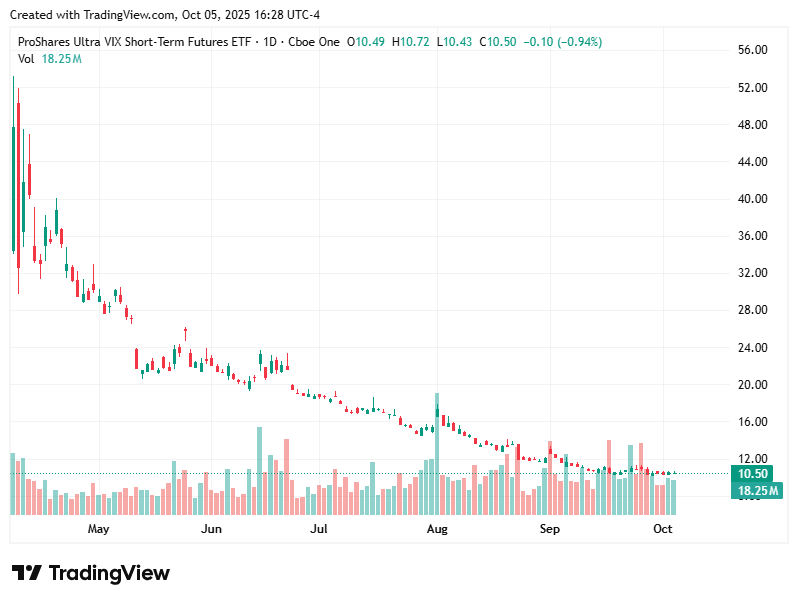
The market is at a fascinating crossroads. The divergence between the Dow and the Nasdaq on Friday encapsulates the central tension we face: do we stick with the high-flying tech winners that have powered the bull run, or do we rotate into the more value-oriented, cyclical, and defensive parts of the market that have been left behind?
A Choppy, Sideways Grind with an Upward Bias.
I do not expect a major market correction in the near term. The underlying momentum is too strong, and the fear of missing out (FOMO) is still a powerful force. However, I also don’t expect a straight shot higher from here. The record highs in the Dow and S&P 500 will invite some profit-taking, and the weakness in mega-cap tech needs to be respected.
Here’s what we’ll be watching for next week:
The Government Shutdown Saga: While the market has shrugged it off so far, the longer it drags on, the more economic data we miss. This uncertainty will eventually start to weigh on sentiment. Any sign of a resolution would be a major positive catalyst.
Fed Speak: With a lack of hard data, the words of Fed officials will carry even more weight. We’ll be parsing every syllable for clues about their thinking on inflation and the path of interest rates. Any hawkish surprises could easily derail the rally.
The Rotation Theme: Will the outperformance of sectors like healthcare, utilities, and small-caps continue? Or will investors rush back into the perceived safety of mega-cap tech at the first sign of trouble? I believe the rotation has legs. The valuation gap between the market leaders and laggards is still historically wide, providing a compelling reason for money to keep moving into cheaper sectors.
The Palantir (PLTR) Fallout: How does Palantir respond to the U.S. Army report? Does the stock stabilize, or is this the start of a more significant downtrend? The resolution of this story will have implications for the entire high-growth, high-valuation software space.
Overall Strategy: The smart play right now is to be balanced. It’s not the time to be “all-in” on tech, nor is it the time to completely abandon it. A barbell strategy makes the most sense: keep a core holding in high-quality tech leaders (perhaps trimmed after their big run-up) while adding exposure to the sectors that are just starting to work, like healthcare providers and select industrials. Small-caps also look increasingly attractive as a way to play a broadening economic recovery.
The market has proven its resilience time and time again. It has climbed a wall of worry all year, and the push to new highs confirms the bulls are still in control. However, Friday’s fractured close was a warning shot. The easy money in the big tech names has likely been made for now. The next leg of this bull market will require more skill, more research, and a willingness to look for opportunities in the corners of the market that have been ignored. It will be a choppier, more selective environment, but for the diligent investor, it is an environment filled with opportunity.
Disclaimer: The information contained in this newsletter is for informational and educational purposes only. Nothing in this newsletter should be construed as financial, investment, legal, or tax advice. The content is not a solicitation or recommendation to buy, sell, or hold any securities or other financial instruments. The authors and publishers of Stock Region are not financial advisors. All investments involve risk, and the past performance of a security or financial product does not guarantee future results or returns. You are solely responsible for your own investment decisions. Please consult with a licensed financial professional before making any investment decisions.