

Stock Region: Your Weekly Market Briefing - Sunday, October 12, 2025
The stocks featured in this report were previously delivered in our trading room in real-time. To access Stock Region’s real-time trade ideas, then be sure to purchase a membership now.

Disclaimer: The following newsletter is for informational and entertainment purposes only. The content provided is based on publicly available information and represents the opinions of the author. It should not be considered financial, investment, legal, or tax advice. Investing in the stock market involves risk, including the potential loss of principal. All investment decisions should be made with the help of a qualified professional. The author and Stock Region are not liable for any investment losses you may incur. Ticker symbols are provided for informational purposes and are not a recommendation to buy or sell any security. Past performance is not indicative of future results.
A Week That Ended With a Bang (Not the Good Kind)
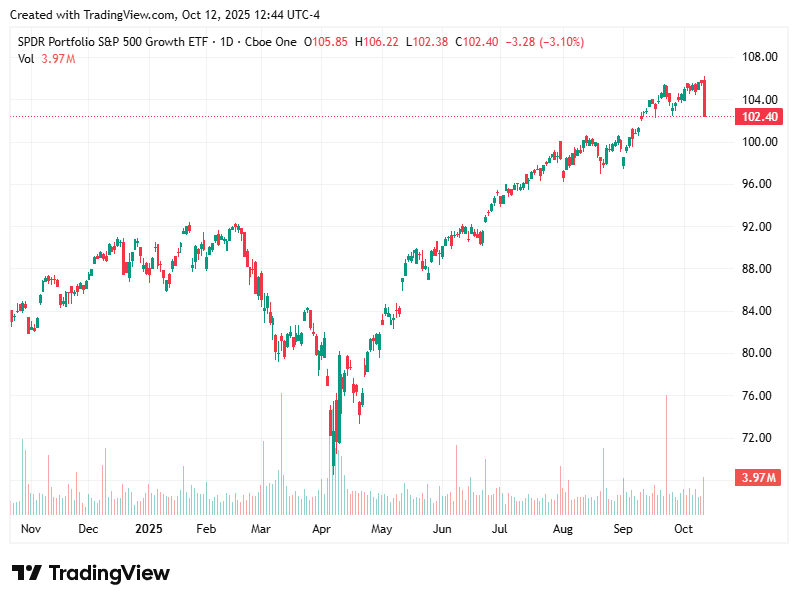
Well, folks, that was a week. It felt like we were coasting, maybe even climbing a gentle hill, for the first few days. The “buy the dip” crowd was feeling confident, patting themselves on the back as the market showed signs of resilience. We saw some green, we felt some hope. And then, Friday happened. It was like driving along on a sunny day, and suddenly, a piano falls out of the sky and lands directly on your car. The culprit? A social media post. Yes, you read that right. In a stunning reminder of how intertwined politics and our portfolios have become, President Trump took to Truth Social, and the market took a nosedive.
It’s moments like these that test the mettle of every investor. One minute you’re checking your positions and smiling, and the next you’re watching a sea of red wash over your screen, feeling that familiar knot tighten in your stomach. The S&P 500 plunged 2.7%, its worst day since April. The tech-heavy Nasdaq Composite, which has been the darling of 2025, got absolutely hammered, dropping a painful 3.6%. The Dow Jones Industrial Average wasn’t spared either, falling 1.9%. It was a broad, indiscriminate selloff that felt less like a strategic retreat and more like a panicked stampede for the exits.
What triggered this financial earthquake? The President’s post was a triple-whammy of market anxiety. He called China “very hostile,” poured cold water on the idea of meeting with President Xi at the upcoming APEC Summit, and—the real gut punch—threatened a “massive increase” of tariffs on Chinese imports. This came right on the heels of Beijing announcing its own move to tighten export controls on rare earth materials, a critical component in everything from our smartphones to advanced defense systems. It was a classic geopolitical tit-for-tat, and our portfolios were caught squarely in the crossfire.
The market’s reaction was immediate and brutal. The buy-the-dip sentiment that started the day evaporated in an instant. It was replaced by a wave of selling that felt relentless. Decliners on both the NYSE and Nasdaq outnumbered advancers by a staggering 5-to-1 margin. This wasn’t just a few sectors taking a hit; it was a systemic shock. The week’s gains? Gone. Vanished into the digital ether.
This is the reality of the market we’re in. It’s not just about earnings reports and P/E ratios anymore. It’s about tweets, tariffs, and geopolitical tension. It requires us to be more than just investors; it requires us to be strategists, constantly aware of the macro-level storms brewing on the horizon. Friday was a harsh lesson, a stark reminder that volatility can return without warning, and that sentiment can turn on a dime. As we head into a new week, the big question on everyone’s mind is: was this a one-day panic attack, or the beginning of a much deeper correction? Let’s break down the carnage and see if we can find some answers.
Sector Carnage: Where The Blood Ran Deepest
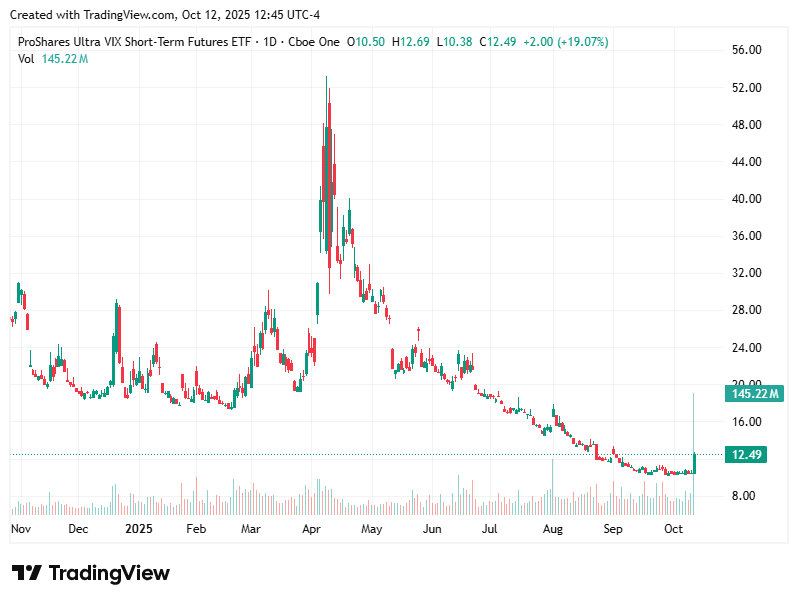
When a selloff is this broad, it’s often helpful to sift through the wreckage to understand where the damage was most severe. It tells a story about investor fear and where the market sees the most significant risk. On Friday, the story was clear: anything tied to growth, technology, and global trade was thrown overboard without a second thought.
Information Technology (S&P 500 Sector: -4.0%)
The tech sector was the epicenter of the earthquake. This makes perfect sense. Tech companies, particularly hardware and semiconductor firms, have incredibly complex and global supply chains that are deeply entangled with China. The mere whisper of new, “massive” tariffs sends a chill down the spine of any CEO in this space. The Philadelphia Semiconductor Index (SOX) was a bloodbath, dropping an astonishing 6.3%.
Let’s talk about the big dogs. NVIDIA (NVDA), the AI titan that has been on an unbelievable run, fell nearly 5%, closing at $183.04. That’s a drop of $9.52 in a single session. Its rival, Advanced Micro Devices (AMD), had an even worse day. After posting a massive 31.55% gain for the week and closing near $216.63, Friday’s news sent it tumbling 7.78% to close at $214.76. It’s a classic case of “what the market giveth, the market can taketh away.” The weekly gain was still impressive, but Friday’s drop was a brutal reality check.
Adding fuel to this fire was a Bloomberg report that the Senate passed legislation to limit AI chip exports to China from both NVDA and AMD. This is a direct shot across the bow. While the U.S. wants to maintain its technological supremacy, these companies rely on the vast Chinese market for a significant portion of their revenue. This double whammy of tariff threats and legislative action creates a perfect storm of uncertainty. Investors hate uncertainty more than anything, and they voted with their sell buttons.
Other tech names also felt the pain. SunPower (SPWR), a name in the solar space, was already having a rough week and the selloff exacerbated its woes, ending the week down 20.35% at $1.59. Solar panels are a key product in the US-China trade conflict, so this isn’t surprising. Daqu New Energy (DQ), a Chinese polysilicon manufacturer, also got crushed, falling 18.73% for the week to $23.54. It’s a direct casualty of the rising tensions.
The lesson here is that the high-beta, high-growth tech names that lead the market on the way up are also the ones that will lead it on the way down when fear takes over. The Vanguard Mega Cap Growth ETF (MGK), which holds all the giants, slid 3.3%. When the biggest and supposedly safest names are falling that hard, you know it’s a bad day.
Consumer Discretionary (S&P 500 Sector: -3.3%)
This sector is a direct barometer of consumer health and confidence, and it’s also highly sensitive to tariffs, as many of the goods we buy are made in China. The preliminary University of Michigan Consumer Sentiment reading for October came in at 55.0, which is just dismal. It’s hovering near historic lows, and the report noted that consumers are not expecting any improvement in prices or job prospects. This is a recipe for disaster for companies that sell non-essential goods.
When people feel uncertain about their jobs and see prices rising, they don’t buy new cars, upgrade their wardrobes, or book lavish vacations. They cut back. And that’s exactly what the market was pricing in on Friday.
The list of losers in this sector this week reads like a who’s who of retail and leisure. Bed Bath & Beyond (BBBY) continued its tragic downward spiral, losing another 26.54% to close at $8.83. This company has become a poster child for retail struggles, and a potential trade war is the last thing it needs. Tilly’s (TLYS), a youth-focused apparel retailer, fell 23.6% to $1.52.
It wasn’t just the struggling names, either. High-end brands also got hit. Ferrari (RACE), the symbol of ultimate luxury, saw its stock skid 21.06% this week to $395.62. This is a shocking drop for a name that typically commands a premium valuation. It suggests that investors fear even the wealthiest consumers might pull back in a global economic slowdown.
Other notable losers included Advance Auto Parts (AAP), down 19.47% to $49.40, and Caesars Entertainment (CZR), which dropped 19.2% to $22.04. The message is clear: whether you’re selling car parts, luxury cars, or casino trips, investors are worried that customers are about to disappear.
One of the most interesting losers was Chegg (CHGG), the online education company. It fell 18.43% to a heartbreaking $1.29. This is a company that has been decimated by the rise of AI, and it seems the market has completely lost faith. It’s a reminder that even in a broad selloff, company-specific issues can make a bad situation even worse.
Energy (S&P 500 Sector: -2.8%)
You would think that with geopolitical tensions rising, oil prices might get a boost. But on Friday, the opposite happened. Crude oil fell sharply, dropping $2.48, or 4.0%, to settle at $58.94 per barrel. Why? Because a trade war between the two largest economies in the world is terrible news for global growth. When economies slow down, demand for energy plummets. Factories produce less, people travel less, and the whole global machine just grinds slower.
This sent shockwaves through the energy sector. Companies that drill, refine, and transport oil saw their stock prices tumble. This is the great paradox of the energy market. It’s caught between the crosscurrents of geopolitical supply risks (which can drive prices up) and global demand fears (which can send them crashing down). On Friday, the demand fears won, and it wasn’t even close.
Financials (S&P 500 Sector: -1.7%)
The financials sector had a mixed but ultimately negative week. On one hand, some international banks like Banco Macro S.A. (BMA) and Grupo Financiero Galicia (GGAL) had strong weeks, up 18.5% and 14.36% respectively. This might be due to country-specific factors or a flight to value in certain emerging markets.
However, the broader trend was negative, especially for U.S.-centric firms. Jefferies Financial Group (JEF) had a brutal week, falling 18.34% to $50.98. A major investment bank like Jefferies is a good bellwether for the health of the market. When its stock gets hit that hard, it tells you that deal-making, M&A activity, and trading revenues are all expected to decline.
The drop in Treasury yields also played a role. While falling yields are good for bond prices, they can compress the net interest margins for banks, which is the spread between what they pay for deposits and what they earn on loans. The 10-year Treasury yield fell ten basis points to 4.05%, a significant move that reflects a flight to safety and a gloomy outlook for economic growth.
The Few, The Proud, The Gainers
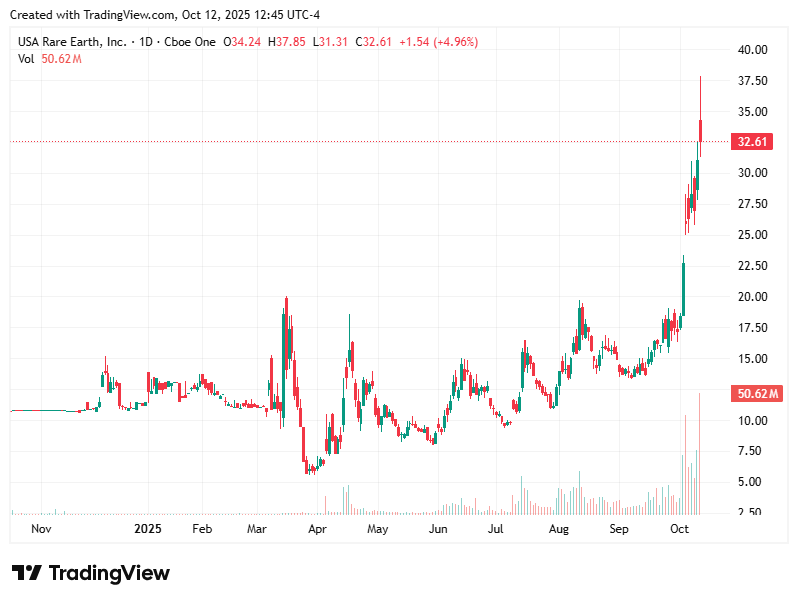
In a market drenched in red, finding any green is like finding an oasis in the desert. On Friday, there were only a few pockets of strength, and they tell an interesting story about where investors were seeking refuge.
Consumer Staples (S&P 500 Sector: +0.3%)
This was the only S&P 500 sector to finish in positive territory. It’s the classic defensive play. When the world feels like it’s falling apart, people still need to buy toothpaste, toilet paper, and soda. These are non-negotiable purchases, which makes the earnings of these companies incredibly stable and predictable.
The star of the show was PepsiCo (PEP), which rose an impressive 3.71% to close at $150.08. The stock was already enjoying some post-earnings strength, and Friday’s fear-driven market sent a flood of capital its way. Investors were essentially trading their high-growth tech stocks for the comforting, reliable fizz of a can of Pepsi. It’s a trade as old as the stock market itself: when fear reigns, boring is beautiful.
However, not all was rosy in the staples sector for the week. USANA Health Sciences (USNA) was a notable loser, dropping 25.63% to $20.20. This is a multi-level marketing company that sells nutritional supplements, and its massive drop suggests company-specific issues that even the defensive nature of the sector couldn’t overcome.
Rare Earths and Critical Minerals
This was the most fascinating and counter-intuitive bright spot. While the threat of a trade war was sinking almost everything else, it was acting as a rocket booster for domestic producers of rare earth materials. China currently dominates the global supply of these minerals, which are vital for modern technology. Beijing’s move to tighten export controls was a warning shot, a demonstration of the leverage it holds.
The market’s reaction was to immediately bid up the price of any company that could potentially offer a non-Chinese alternative. MP Materials (MP), which operates the only major rare earths facility in the Western Hemisphere, was the clear winner. Its stock soared 8.60% on Friday to close at $78.51. Investors are betting that the U.S. government will now be forced to throw its full support, including subsidies and favorable regulations, behind companies like MP to build a secure domestic supply chain.
This is a theme to watch very closely. The weaponization of supply chains is a central feature of the new Cold War with China. This creates enormous risks, but also enormous opportunities for companies that are positioned on the right side of this geopolitical divide.
Healthcare: A Mixed Bag of Hope and Pain
The healthcare sector was a story of extremes this week. On one hand, you had some spectacular gains, driven by promising clinical data and biotech optimism. Fate Therapeutics (FATE) was the biggest winner, rocketing up 28.1% to $1.55. Intellia Therapeutics (NTLA) also had a fantastic week, climbing nearly 20% to $23.95. These are high-risk, high-reward biotech plays, and it seems that good news was able to overpower the macro fears, at least for them.
On the other hand, you had Esperion Therapeutics (ESPR), which cratered 24.09% to $2.51. This is the brutal reality of the biotech lottery. One bad trial result or regulatory setback can wipe out a quarter of a company’s value in the blink of an eye.
Perhaps the most significant healthcare news of the week came from AstraZeneca (AZN). The company announced a major agreement with the Trump administration to lower prescription drug prices for American patients. CEO Pascal Soriot met with the President at the White House to confirm the deal, which aims to equalize U.S. prices with those in other wealthy countries. This is a huge development. The political pressure to lower drug costs has been building for years, and this could be a landmark moment. For AZN, it’s a strategic move to get ahead of potential government mandates. While the stock was down slightly on Friday, this could be a long-term positive if it generates goodwill and forestalls more draconian measures.
Corporate News Roundup: CEOs, Lawsuits, and Shelf Offerings
Beyond the macro drama, it was a busy week for individual company news. Here are some of the key stories that moved stocks:
Executive Shuffle at NI Holdings (NODK): CEO Seth Daggett stepped down effective immediately, with the board appointing Cindy Launer as the new President and CEO. Ms. Launer has been on the board since 2019 and previously served as COO of AIG’s Commercial Insurance Business. The market seemed to take this news in stride, with the stock down only slightly. A leadership change can be disruptive, but appointing an experienced industry insider like Launer often calms investor nerves. It suggests a focus on stability and operational execution.
Lanvin Group (LANV) CFO Departs: The luxury fashion group announced that its CFO, David Chan, will be stepping down on October 27th. The stock dropped on the news. The departure of a CFO is always a bit unsettling for investors, as they are the gatekeepers of the company’s financial health. It raises questions about the reasons for the departure and the stability of the finance department.
Almonty Industries (ALM) Sues Pure Tungsten: Almonty has commenced legal proceedings against a competitor, Pure Tungsten, for allegedly making false and misleading statements. This is a messy corporate dispute. While Almonty is trying to protect its reputation, lawsuits are expensive, distracting, and the outcome is never certain. Investors generally dislike this kind of drama.
Kopin (KOPN) Appeals Judgement: Kopin is appealing a massive $19.7 million judgement against it in a case involving Blue Radios Inc. This is a significant overhang for a company of Kopin’s size. An appeal kicks the can down the road, but the financial risk remains until the matter is fully resolved.
Shareholder Shakeup at Rezolve AI (RZLV): A large block of shares associated with the estate of the late John Wagner was transferred to a new institutional investor. The company framed this as a positive, welcoming a “world-class institutional investor.” However, any large share sale, even for estate purposes, can create an overhang on a stock. The positive spin is that a fundamentals-driven investor saw value and was willing to take a large position.
Johnson & Johnson (JNJ) Warns of “Mini-Tender” Offer: JNJ issued a warning to its shareholders about an unsolicited “mini-tender” offer from a company called Tutanota LLC. The offer price of $145.00 per share was well below the market price. This is a classic tactic to trick less-informed retail investors into selling their shares on the cheap. It’s a good reminder to always read the fine print and be skeptical of any unsolicited offers. Kudos to JNJ for proactively protecting its shareholders.
Zoetis (ZTS) Gets Positive EU News: The animal health giant announced that a European regulatory committee recommended approval for its new dog osteoarthritis pain drug, Lenivia. This is great news for the company and for dog owners. The European market is huge, and a new blockbuster drug can be a significant revenue driver for years to come. The commercial launch is expected in 2026. This is the kind of solid, fundamental progress that long-term investors love to see.
Galaxy Digital (GLXY) Secures Major Investment: The crypto-focused financial services firm announced a $460 million strategic investment from a leading asset management firm. The funds will be used to build out its Helios data center campus. This is a massive vote of confidence in Galaxy and the broader digital asset space. Despite the volatility in crypto markets, it shows that “smart money” is still making long-term bets on the infrastructure that underpins the ecosystem.
A Flurry of Shelf Offerings: We saw a number of companies file for mixed securities shelf offerings this week, including Safe Pro Group (SPAI) for $100 million, enCore Energy (EU) for $350 million, and NioCorp Developments (NB) for an unspecified amount. A shelf offering allows a company to register a new issue of securities without having to sell the entire issue at once. It gives them the flexibility to raise capital on an as-needed basis over a period of time. While it can be dilutive to existing shareholders, it’s also a prudent way for companies to ensure they have access to cash to fund growth or navigate uncertain times. SELLAS Life Sciences (SLS) also filed for a common stock offering by selling shareholders, which is different as it means existing large investors are the ones selling, not the company raising new cash.
Finding Opportunity in the Chaos
In the wake of a market-wide selloff, it’s easy to want to run for the hills. But times of fear and dislocation are often when the best long-term buying opportunities present themselves. This week’s news has highlighted key themes and companies that could be poised for growth, even in this uncertain environment.
(Please remember, these are not recommendations to buy. They are ideas for your watchlist and further research.)
1. The Domestic Supply Chain Play: MP Materials (MP)
Ticker: MP
Market Cap: ~$13.5 Billion
This Week’s News: China’s tightening of rare earth export controls and President Trump’s tariff threats have put a spotlight on the desperate need for a non-Chinese supply of these critical minerals. MP Materials, operating the only major rare earth mine and processing facility in the U.S., is the single most direct beneficiary of this geopolitical shift.
The Growth Thesis: The U.S. government and its allies in Europe and Asia now see securing a supply of rare earths as a matter of national security. This is no longer just an economic issue; it’s a strategic imperative. We can expect a firehose of government support for MP in the form of grants, loan guarantees, and long-term purchase agreements from the Department of Defense and other agencies. The company is vertically integrating its operations to produce separated magnets, which are essential for EV motors and wind turbines, moving it up the value chain. The demand for these materials is set to explode with the green energy transition and the proliferation of electronics. MP is in the perfect position, at the perfect time.
The Risk: The stock has already run up significantly. It is vulnerable to any sign of a thaw in U.S.-China relations (unlikely in the short term, but possible). Also, the technical process of refining rare earths is complex and capital-intensive, and any operational hiccups could spook investors.
2. The Animal Health Behemoth: Zoetis (ZTS)
Ticker: ZTS
Market Cap: ~$65 Billion
This Week’s News: The positive opinion from European regulators for its new canine osteoarthritis drug, Lenivia, is a significant pipeline victory.
The Growth Thesis: Zoetis is the undisputed king of the animal health industry. This is an incredibly attractive business for many reasons. First, people love their pets. They will spend almost anything to keep them healthy, making the industry highly resilient to economic downturns. We’ll cancel a vacation before we skip Fido’s medication. Second, the pipeline is robust. The approval of Lenivia is just the latest example. Zoetis consistently invests in R&D to bring new, innovative treatments to market for both companion animals and livestock. Third, it has tremendous pricing power and a global footprint. The “humanization of pets” is a durable, long-term trend that provides a powerful tailwind for growth. The recent pullback in the stock due to broad market weakness could present an attractive entry point for a best-in-class company.
The Risk: The biggest risk for Zoetis is competition and potential new regulations around drug pricing, although the animal health market is generally less scrutinized than human pharmaceuticals. A major failure in its drug pipeline could also hurt the stock.
3. The Digital Infrastructure Bet: Galaxy Digital (GLXY)
Ticker: GLXY
Market Cap: ~$12 Billion
This Week’s News: A $460 million strategic investment from a major asset manager to build out its Helios data center is a massive vote of confidence.
The Growth Thesis: Forget trying to pick the winning cryptocurrency. The “picks and shovels” play is often the smarter bet. As the digital asset ecosystem grows, the demand for institutional-grade infrastructure—trading, custody, asset management, and mining—will explode. Galaxy Digital aims to be the Goldman Sachs of the crypto world. The new investment specifically targets the buildout of its Helios data center, which will provide critical IT load for crypto mining. This is a bet on the long-term institutional adoption of crypto and blockchain technology. While crypto prices are volatile, the need for the underlying infrastructure is a more secular growth story. With this new capital injection, GLXY is well-funded to execute on its vision.
The Risk: This is a high-risk play. The company’s fortunes are still heavily tied to the price of cryptocurrencies like Bitcoin and Ethereum. A prolonged “crypto winter” would hurt its business across the board. The regulatory environment for crypto is also a huge unknown and a significant source of risk.
4. The Contrarian Tech Play: Advanced Micro Devices (AMD)
Ticker: AMD
Market Cap: ~$350 Billion
This Week’s News: The stock got hammered by tariff fears and potential legislative restrictions on AI chip sales to China. It was a brutal end to an otherwise spectacular week.
The Growth Thesis: This is a contrarian idea. Buying a stock after a 7%+ drop on scary headlines is not for the faint of heart. But let’s look at the big picture. AMD, under the leadership of CEO Lisa Su, has mounted one of the most incredible corporate turnarounds in history. It has gone from being an also-ran to a true competitor to Intel and NVIDIA in CPUs and GPUs. The AI revolution is real, and it is going to require an astronomical amount of computing power. While NVIDIA is the current king, AMD is positioning itself as a strong number two. There is more than enough room for two major players in this gargantuan market. The selloff was based on fear of what might happen with China. While the risk is real, it’s possible the market has overreacted. The long-term demand for AMD’s chips from the rest of the world remains immense. For investors with a strong stomach and a long-term horizon, this fear-induced dip could be the opportunity to own a premier technology company at a better price.
The Risk: The China risk is very real and should not be underestimated. If the U.S. government imposes a full ban on high-end AI chip sales to China, it would be a material blow to AMD’s revenue and growth projections. The stock trades at a high valuation, making it vulnerable to further downside if growth disappoints.
The Fog of War
So, where do we go from here? After a gut-punch like Friday, it’s tempting to predict that the sky is falling. But as investors, we need to remain level-headed and assess the situation from multiple angles.
The Bear Case: The Correction Has Just Begun
The bears will tell you that Friday was not a one-off event. It was the bursting of a complacency bubble. For weeks, the market had been shrugging off bad news and marching steadily higher, driven by a handful of mega-cap tech stocks. Volatility was suspiciously low. The VIX, the market’s “fear gauge,” was snoozing. Friday was a wake-up call.
The trade war with China, which had faded into the background, is now front and center once again. President Trump’s rhetoric was not ambiguous; it was overtly hostile. A “massive increase” in tariffs would be a body blow to corporate profits and global supply chains. It would reignite inflation just as the Fed is trying to get it under control, and it would almost certainly tip the fragile global economy into a recession.
The consumer is weak. The University of Michigan sentiment data is flashing red. People are worried about their jobs and the cost of living. A pullback in consumer spending, which accounts for two-thirds of the U.S. economy, would be devastating.
In this scenario, Friday was just the first leg down. We could see a 10-15% correction from the recent highs as the market reprices for a world of lower growth, higher inflation, and persistent geopolitical risk. The tech darlings that led the rally will be the ones that lead the decline.
The Bull Case: A Healthy Shakeout
The bulls, while licking their wounds, will argue that we’ve seen this movie before. The market has a notoriously short memory when it comes to geopolitical scares. Trump’s negotiating style is to start with an extreme position and then walk it back. This could all be political posturing ahead of the APEC summit and the 2026 presidential election.
They will also point out that the fundamental picture for many U.S. companies remains strong. Corporate balance sheets are healthy. While the consumer is feeling pinched, unemployment remains relatively low. And the AI revolution is a genuine, multi-trillion-dollar technological shift that will create immense wealth over the next decade, regardless of short-term political noise.
In this view, Friday’s selloff was a much-needed, healthy cleansing. It shook out the weak hands, brought valuations down from frothy levels, and reset expectations. It creates a better base for the next leg up. The flight to safety sent Treasury yields tumbling, which could actually be a long-term positive for growth stocks once the immediate fear subsides. The bulls will be looking for opportunities to buy their favorite companies at a discount during this period of turmoil.
Personal Take: Proceed With Extreme Caution
We’re leaning cautiously bearish for the immediate short term. Friday’s selloff felt different. It was too broad and too violent to be dismissed as just another dip. The combination of renewed trade war fears and a weakening consumer is a toxic cocktail. The market had priced in a soft landing, but the odds of a harder, bumpier landing just went up significantly.
We believe we are in for a period of heightened volatility. The market will be hanging on every headline out of Washington and Beijing. We expect to see further downside in the coming weeks as institutional investors de-risk their portfolios. A test of the S&P 500’s 200-day moving average seems plausible.
However, we are not a perma-bear. We believe in the long-term power of innovation and the resilience of the American economy. We see this potential pullback not as a reason to panic-sell everything, but as an opportunity to build a shopping list. This is the time to do your homework. Identify the high-quality, best-in-class companies with strong balance sheets and durable competitive advantages. The market may be about to offer you a chance to buy them on sale.
The strategy for the coming weeks is to be patient. Keep some cash on the sidelines. Don’t try to catch a falling knife. Wait for the dust to settle and for a clear bottom to form. And focus on the themes that will thrive regardless of the macro environment: national security, supply chain resilience, and non-discretionary spending on things like pet care and healthcare.
This is a market for stock pickers, not for passive index investors. The tide is no longer lifting all boats. In fact, the tide just went out in a hurry. Now we get to see who’s been swimming naked.
Disclaimer: All information contained in this newsletter is for informational purposes only and does not constitute investment advice. The author may hold positions in some of the securities mentioned. You should not construe any such information or other material as legal, tax, investment, financial, or other advice. Nothing contained in our newsletter constitutes a solicitation, recommendation, endorsement, or offer by Stock Region or any third-party service provider to buy or sell any securities or other financial instruments. Please conduct your own research and consult with a professional financial advisor before making any investment decisions.