

Fed Cuts Rates, Novo's Miracle Pill, and Quantum Leaps
The stocks featured in this report were previously delivered in our trading room in real-time. To access Stock Region’s real-time trade ideas, then be sure to purchase a membership now.

Disclaimer: This newsletter is for informational and educational purposes only. The content provided is not intended to be, and should not be construed as, financial, investment, legal, or tax advice. All investment strategies and investments involve risk of loss. Nothing contained in this newsletter constitutes a solicitation, recommendation, endorsement, or offer by Stock Region or any third-party service provider to buy or sell any securities or other financial instruments. Before making any investment decisions, you should consult with a qualified professional financial advisor. We are not liable for any actions taken based on the information provided herein.
Table of Contents
Market Pulse: The Fed Finally Cuts, But The Party's Complicated
Corporate Deep Dive: Winners, Losers, and Shake-ups
Novo Nordisk (NVO): The Weight Loss Revolution Gets a Pill
Ballard Power (BLDP): Fueling the Future of Transit
IonQ (IONQ): Taking Quantum Computing to the Final Frontier
NRG Energy (NRG): Powering Through with Confidence
Nucor (NUE): Steel Yourself for a Tough Quarter
Biogen (BIIB): A Breakthrough for Postpartum Depression
Standard BioTools (LAB): Painful Cuts for Future Gains
Growth Stocks on Our Radar: Where We See Long-Term Potential
Final Word: Navigating the Noise
1. Market Pulse: The Fed Finally Cuts, But The Party's Complicated

Well, the day we’ve all been circling on our calendars has come and gone. The Federal Open Market Committee (FOMC) finally did it—they cut the Fed funds rate by 25 basis points. For months, the market has been pricing this in, anticipating the sweet relief of a monetary policy pivot. And for a fleeting moment, it felt like pure euphoria.
Shortly after the 2:00 PM ET announcement, the Dow Jones Industrial Average (DJIA) rocketed to a new all-time high of 46,261.95. The S&P 500 came within a whisper—just three points—of its own record. It was the "pop" we were waiting for. But then, reality, as it so often does, settled in. By the closing bell, the market’s initial elation had fizzled into a mixed, almost confused state.
So, what happened? Let's break it down.
The S&P 500 finished the day down a marginal 0.1%, while the tech-heavy Nasdaq Composite shed 0.3%. The Dow managed to hang onto a 0.6% gain, but it was a far cry from its intraday peak. This split decision tells a story of a market grappling with not just the rate cut itself, but the Fed's commentary and, more importantly, its future projections—the infamous "dot plot."
While the 25-basis point cut was a given, the real meat was in the guidance. Fed officials are now split right down the middle about what comes next in 2025. Out of 19 members, nine see just one more cut this year, while ten are hoping for two. This internal division signals a cautious, data-dependent approach. The message seems to be: "Yes, we're easing, but don't expect us to open the floodgates."
The market reaction amplified this uncertainty. The probability of another cut at the October meeting jumped to nearly 90%, according to the CME FedWatch tool. But the big surprise came from the 2026 outlook. The median projection now calls for only one rate cut in 2026, a stark contrast to the three cuts the futures market had been pricing in. This is a classic "buy the rumor, sell the news" scenario, with a twist. The market got the cut it wanted, but the long-term forecast for cheap money just got a little less rosy.
This hesitation was most visible in the mega-cap tech space. These giants, whose valuations are acutely sensitive to long-term interest rates, came under pressure. NVIDIA (NVDA), the market’s darling, had a particularly rough session, closing down 2.62% to $170.29. The drop was fueled by a Financial Times report that the Chinese government is pressuring domestic companies to halt purchases of NVIDIA's chips. This geopolitical headwind, combined with the shifting rate outlook, was enough to drag down the entire information technology sector (-0.7%). Other growth-oriented sectors like industrials (-0.5%) and consumer discretionary (-0.3%) also finished in the red.
On the flip side, the rate cut provided a nice tailwind for financials (+1.0%), which can benefit from a steeper yield curve and increased economic activity. Consumer staples (+0.9%) also had a strong day, suggesting a slight defensive tilt as investors digest the Fed's measured tone.
The key takeaway here is that the era of aggressive, predictable easing may not be in the cards. The Fed is walking a tightrope, trying to nurture economic growth without reigniting inflation. For investors, this means the path forward won't be a straight line up. Volatility is here to stay, and the market will remain hyper-focused on every piece of economic data as we head toward year-end. The easy money might be trickling in, but the journey ahead requires patience and a steady hand.
Year-to-Date Performance Check:
Nasdaq Composite: +15.3%
S&P 500: +12.2%
DJIA: +8.2%
Russell 2000: +8.0%
2. Corporate Deep Dive: Winners, Losers, and Shake-ups
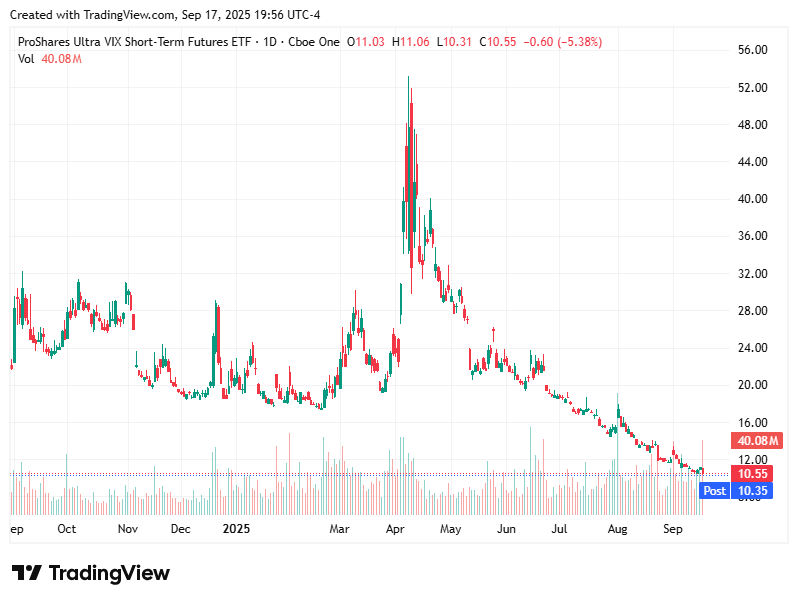
Beyond the macro drama of the Fed meeting, individual companies were making waves with news that could shape their futures for years to come. Here’s a closer look at the stories that caught our attention.
Novo Nordisk (NVO): The Weight Loss Revolution Gets a Pill
Let's start with what might be the biggest story of the day, if not the year, in healthcare. Novo Nordisk (NVO) is a name that has become synonymous with the GLP-1 weight-loss drug phenomenon, primarily through its injectable drug, Wegovy. But the company just dropped a bombshell that could fundamentally change the game.
After the market closed, Novo Nordisk published a study on its oral version of semaglutide—essentially Wegovy in a pill. The results are, frankly, stunning. The 25 mg oral dose delivered an average weight loss of 16.6% in people with obesity. To put that in perspective, one in three participants in the study lost 20% or more of their body weight.
This is a monumental development. The biggest barrier to wider adoption of drugs like Wegovy and Ozempic has been the need for injections. Many people are simply needle-averse. An effective, once-daily pill eliminates that barrier entirely. It transforms a powerful medical treatment into something as simple as taking a daily vitamin. The potential market expansion is almost difficult to comprehend.
The stock reacted positively, climbing to $58.20 on the news. But the long-term implications are what really have us excited. Novo Nordisk has already submitted the drug to the FDA for chronic weight management and, in a sign of extreme confidence, has already begun production at its U.S. facilities. They are not waiting around. They know what they have.
This isn't just about weight loss, either. The study also showed significant improvements in cardiovascular risk factors and the ability to perform everyday physical activities. This positions the oral drug not just as a vanity product, but as a critical tool for improving public health on a massive scale. The ripple effects could be felt across the entire healthcare system, from reducing the strain of obesity-related diseases to changing how we approach preventative medicine. For Novo Nordisk, this solidifies its position as the undisputed king of the metabolic health space. The company is not just riding a wave; it's creating a tsunami.
Ballard Power (BLDP): Fueling the Future of Transit
Over in the clean energy sector, Ballard Power Systems (BLDP) made a significant announcement that reminds us the hydrogen economy is still very much in the works. The company is launching its new FCmove-SC fuel cell, a product specifically engineered for city transit buses. The stock saw a nice pop on the news, rising to $2.52.
Why does this matter? The biggest hurdles for hydrogen fuel cell adoption have always been cost and efficiency. Ballard claims this new model offers improved performance and, crucially, a lower lifecycle cost that moves it closer to "diesel parity." That’s the holy grail for clean transportation—making the green option as economically viable as the dirty one.
The FCmove-SC is designed to be cheaper, easier to integrate into existing bus manufacturing processes, and equipped with "smarter" fleet service analytics. This is a practical, business-focused approach. Ballard isn't just selling a science project; it's selling a solution designed to solve the real-world problems of transit authorities. They are targeting a core market where hydrogen makes a lot of sense: heavy-duty vehicles that run predictable routes and can be refueled at a central depot.
While the clean energy sector has been beaten down amid high interest rates and shifting government policies, news like this is a vital sign of life. Ballard is focusing on tangible progress and commercial viability. This launch won't change the world overnight, but it’s a critical step in proving that hydrogen can be a competitive and reliable part of our future energy mix. For investors who have been patient with the sector, it’s a welcome sign of innovation pushing through the noise.
IonQ (IONQ): Taking Quantum Computing to the Final Frontier
From a grounded technology to one that is literally reaching for the stars. IonQ (IONQ), a leader in the mind-bending field of quantum computing, announced it has signed a memorandum of understanding (MOU) with the U.S. Department of Energy (DOE). The goal? To advance the development and deployment of quantum technologies in space.
The stock surged on the news, closing at $65.40, a gain of over 3%. This is a huge vote of confidence from a major government agency. The partnership will see IonQ help design and execute an orbital demonstration of quantum-secure communications. This isn't science fiction; it's the future of national security and data encryption.
Quantum computing promises to break current encryption standards, making everything from financial transactions to military communications vulnerable. The only way to fight a quantum computer is with quantum technology. By developing quantum-secure networking from ground-to-orbit-to-ground, the DOE and IonQ are working on building the next generation of unhackable communication networks.
But the MOU goes even further. It outlines a framework for exploring other quantum applications in space, including:
Quantum Sensing and Mapping: Creating hyper-accurate sensors for scientific research and intelligence gathering.
Alternate Position, Navigation, and Timing (PNT): Developing a new form of navigation that isn't reliant on GPS, which is vulnerable to jamming and spoofing.
Quantum Networking in Orbit: Creating a network of quantum-enabled satellites.
For a company like IonQ, this partnership is invaluable. It provides not only a stream of potential revenue but also an unparalleled platform to test and prove its technology in the most demanding environment imaginable. It cements IonQ’s position as a critical partner for the U.S. government in a technological race that has profound geopolitical implications. While true quantum computing is still in its early days, this move into space shows that the technology is rapidly moving from the lab to real-world, mission-critical applications.
NRG Energy (NRG): Powering Through with Confidence
In a market worried about a potential economic slowdown, a guidance raise is a beautiful thing. That’s exactly what utility giant NRG Energy (NRG) delivered. The company announced it is raising its full-year 2025 earnings per share (EPS) guidance, citing the "strength of our platform."
NRG now sees FY25 EPS in the range of $7.55-$8.15, a significant jump from its previous forecast of $6.75-$7.75. The new range puts it right in line with analyst expectations, but the midpoint of its Adjusted EBITDA guidance was increased by a cool $100 million. The stock ticked up modestly to $164.58.
According to CEO Larry Coben, this is the second straight year the company has raised guidance after the summer. This isn't a one-off event; it's a pattern of execution. For a utility company, which is often seen as a slow-and-steady dividend payer, this kind of consistent outperformance is impressive. It demonstrates that NRG’s management has a firm handle on its operations and is adept at navigating the complexities of energy markets.
In an uncertain economic environment, companies that can provide this kind of earnings visibility and reliability become incredibly attractive. NRG is showing that it can deliver for shareholders, and that confidence is a valuable commodity in today's market.
Nucor (NUE): Steel Yourself for a Tough Quarter
On the other side of the guidance coin, we have steel producer Nucor (NUE). The company issued a downbeat forecast for the third quarter, sending a chill through the industrial sector. Nucor now expects Q3 EPS of $2.05-$2.15, well below the analyst consensus of $2.57. The stock dipped slightly to $142.80 on the news.
Nucor’s warning is a bellwether for the broader economy. The company pointed to weakness across all three of its operating segments. In its core steel mills segment, it’s facing a double whammy of lower volumes and margin compression. This suggests that demand from key end markets like construction and automotive might be softening.
Its steel products segment is also seeing its earnings decrease due to higher input costs, while its raw materials business is being squeezed by lower profitability in scrap processing. When a company as foundational to the industrial economy as Nucor signals weakness across the board, it’s worth paying attention.
This could be an early warning sign that the lagged effects of the Fed's previous rate hikes are finally starting to bite into the "real" economy. While the market celebrates a rate cut today, Nucor’s guidance is a stark reminder that many sectors are still navigating a challenging demand environment. We’ll be watching closely to see if this weakness is contained to the steel industry or if it begins to spread to other corners of the industrial world.
Biogen (BIIB): A Breakthrough for Postpartum Depression
Here's another piece of genuinely positive news from the biotech world. Biogen (BIIB) announced that the European Commission has granted marketing authorization for ZURZUVAE, a treatment for postpartum depression (PPD). The stock rose to $144.87, as investors recognized the significance of this approval.
Postpartum depression is a serious and often overlooked condition that affects countless new mothers. Current treatments can take weeks or months to work, a critical delay for a mother bonding with her newborn. ZURZUVAE represents a paradigm shift. It is a once-daily, oral treatment course that lasts just 14 days.
The clinical data is compelling. The SKYLARK study showed a significant reduction in depressive symptoms as early as Day 3, with the effects sustained through Day 45. This rapid action is a game-changer. For a new mother in the depths of PPD, getting relief in days instead of weeks is life-altering.
The approval in the E.U. opens up a major new market for Biogen. ZURZUVAE is the first and only treatment specifically indicated for PPD in the European Union. While the side effects include somnolence and dizziness, the overall profile was well-tolerated. For Biogen, a company that has faced challenges with its pipeline in recent years, ZURZUVAE is a much-needed commercial and clinical victory. It addresses a significant unmet medical need and provides a new avenue for growth.
Standard BioTools (LAB): Painful Cuts for Future Gains
Not all news is about growth and breakthroughs. Sometimes, it’s about survival and strategic resets. Standard BioTools (LAB) announced a restructuring plan that includes laying off approximately 15% of its global workforce. The stock traded down slightly to $1.35.
The company stated the move is designed to "improve operational efficiency and reduce operating costs" to align with its current revenue projections. This is corporate speak for "we're spending too much money for the amount of revenue we're generating." The restructuring will cost the company about $7.5 million in severance and related benefits.
While layoffs are always painful for the employees affected, this is often a necessary step for a company looking to right the ship. For investors, a move like this can be a double-edged sword. In the short term, it's an admission that the previous strategy wasn't working. It signals distress.
However, in the long term, it can be a sign that management is taking decisive action to get costs under control and put the company on a more sustainable financial footing. By trimming the fat, Standard BioTools is hoping to position itself to better execute its long-term strategic plan. The road ahead will likely be bumpy, but this painful step may be the first one on the path to recovery.
3. Growth Stocks on Our Radar: Where We See Long-Term Potential
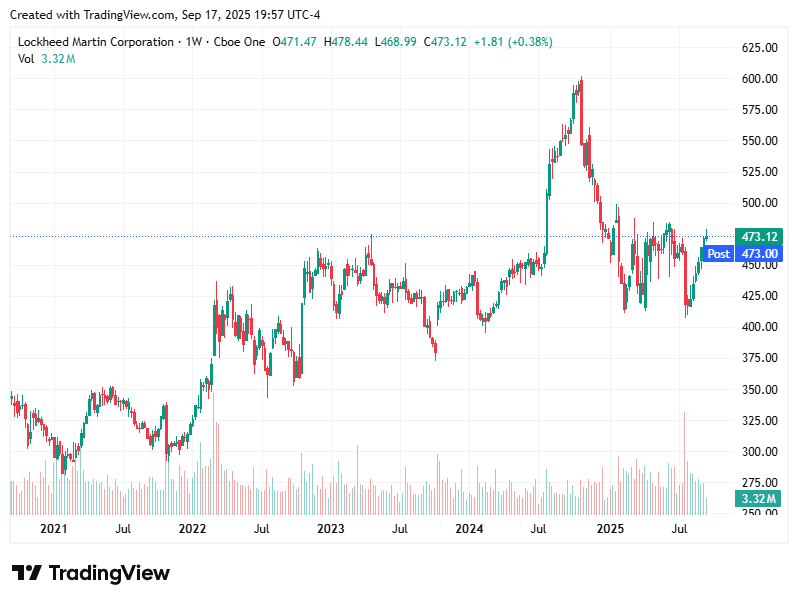
Today’s news cycle brought many exciting, forward-looking companies into the spotlight. While we always advocate for diversification and a long-term mindset, it’s hard not to feel a surge of optimism when you see true innovation at work. Here are a few of the names from today’s briefing that we believe have compelling growth stories for the patient investor.
Novo Nordisk (NVO)
It feels almost too obvious to mention, but the potential here cannot be overstated. With the successful trial of its oral semaglutide, Novo Nordisk is on the verge of unlocking a market that is exponentially larger than its current one. The global obesity epidemic is a multi-trillion-dollar problem, and NVO is now positioned to offer the most accessible and effective solution. Think about the network effects: as more people take the drug and see results, it will generate more word-of-mouth, more doctor prescriptions, and more pressure on insurance companies to provide coverage. The company's focused investment in production shows they are preparing for an avalanche of demand. This isn't just a drug; it's a societal shift in a bottle, and Novo Nordisk holds the patent. The long-term trajectory for revenue and earnings growth looks astronomical.
Ballard Power Systems (BLDP)
Investing in clean energy has been a rollercoaster, but Ballard’s story is one of quiet, persistent execution. The focus on heavy-duty transit is smart. It sidesteps the infrastructure challenges of personal hydrogen vehicles and targets a commercial market where the value proposition is clearest. The new FCmove-SC fuel cell getting closer to "diesel parity" is the key inflection point we've been waiting for. As governments and corporations around the world continue to push decarbonization mandates, Ballard is positioning itself as a go-to provider of a practical, working solution. This is not a speculative bet on a future technology; it's an investment in a company that is methodically building a real business in a sector with massive secular tailwinds. The path may be slow, but the destination—a cleaner transportation system—is inevitable, and Ballard is paving the road.
IonQ (IONQ)
This is admittedly the highest-risk, highest-reward name on this list. Quantum computing is still in its infancy. But the partnership with the Department of Energy is a massive de-risking event. It provides a stamp of legitimacy and a clear path to early revenue and application development. While other quantum companies are still stuck in the theoretical, IonQ is preparing to deploy its technology in space. The focus on quantum-secure communications and alternative PNT systems places it at the heart of the next generation of national security infrastructure. An investment in IonQ today is a bet that they can maintain their technological lead in a field that will redefine computing as we know it. The potential upside is not just 2x or 5x; it’s a total paradigm shift. For investors with a high tolerance for risk and a very long time horizon, IonQ offers a chance to get in on the ground floor of what could be the most important technological revolution of the 21st century.
4. Final Word: Navigating the Noise
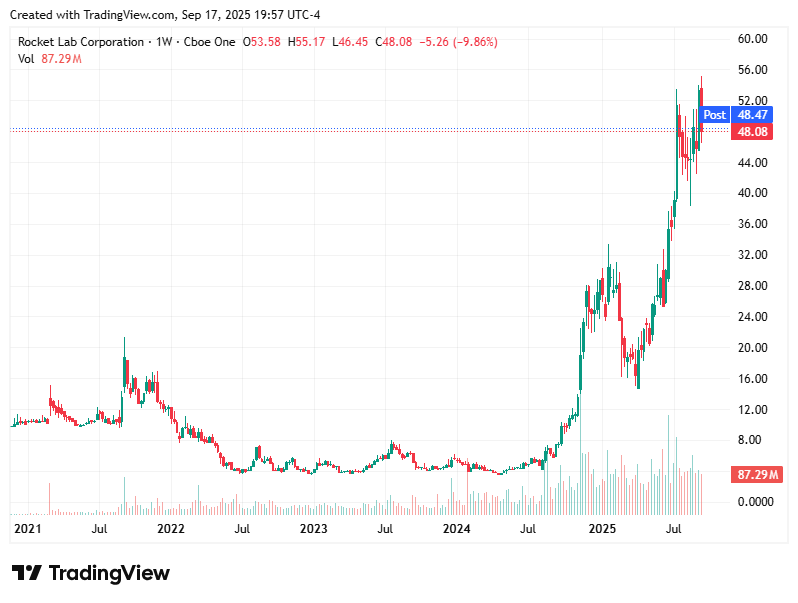
Today was a perfect microcosm of the modern market. A major, long-awaited macroeconomic event drove a euphoric spike, only to be tempered by the fine print and a dose of reality. Mega-cap stocks wavered under the weight of long-term rate expectations, while individual companies delivered news that ranged from revolutionary breakthroughs to painful but necessary restructuring.
It’s easy to get swept up in the intraday volatility, to feel the sugar rush of a new all-time high and the subsequent sting of a pullback. But as long-term investors, our job is to zoom out. The Fed’s decision to cut rates, even with a cautious outlook, confirms that the monetary policy cycle has turned. That is fundamentally positive for equities.
However, the mixed signals from the Fed and the cautious guidance from a bellwether like Nucor remind us that the economic path is not yet clear. This is not the time for reckless abandon. It is a time for disciplined, diversified investing.
The incredible innovations from companies like Novo Nordisk, IonQ, and Biogen show that human ingenuity continues to push boundaries and create new avenues for growth, regardless of what the Fed does next quarter. These are the stories that build lasting wealth.
Stay informed, stay diversified, and remember that investing is a marathon, not a sprint. The market will continue to throw noise and distractions our way. Our task is to focus on the signal.
Final Disclaimer: The information in this newsletter is not investment advice. All trading and investment decisions are your own responsibility. Please do your own research and consult with a professional financial advisor before making any investment decisions. Stock Region and its writers may or may not hold positions in the stocks mentioned. Past performance is not indicative of future results.
Copyright © 2025 Stock Region. All Rights Reserved.