

Stock Region Market Briefing: The Oracle Speaks and Mega-Caps Flex
The stocks featured in this report were previously delivered in our trading room in real-time. To access Stock Region’s real-time trade ideas, then be sure to purchase a membership now.

Disclaimer: This newsletter is for informational and entertainment purposes only. The content provided herein is not financial, legal, or investment advice. The opinions expressed are the author's own and do not represent the views of Stock Region. All investments carry risk, including the potential loss of principal. Please conduct your own research and consult with a qualified financial advisor before making any investment decisions. Stock Region and its writers may hold positions in the securities mentioned. Past performance is not indicative of future results.
A Tale of Two Markets: When Titans Carry the World

Good morning, fellow market watchers, and welcome to another edition of the Stock Region Market Briefing. As the dust settled on Friday, September 14, 2025, we were left with a trading session that felt like a paradox wrapped in an enigma. On one hand, you had the big dogs of the S&P 500 and Nasdaq flexing their muscles, hoisting the major indices to new, dizzying heights. On the other, a sea of red washed over the broader market, with small- and mid-cap stocks taking a beating. It was a classic case of the generals charging ahead while the soldiers retreated—a market dynamic that leaves many of us scratching our heads and wondering, "What's next?"
The Nasdaq Composite didn't just inch higher; it soared, closing at a record 22,141.10 (+0.4%). The S&P 500 also flirted with history, touching a new all-time high of 6,600.21 before pulling back to a modest 0.1% loss. But don't let those headline numbers fool you. Underneath the surface, the story was one of divergence. The Dow Jones Industrial Average fell 0.5%, and the pain was even more acute in the smaller-cap space, with the Russell 2000 dropping a full 1.0%. The S&P 500 Equal Weighted Index, which gives every company an equal say, was down 0.8%, a stark contrast to its market-cap-weighted counterpart.
What does this tell us? It tells us that a handful of behemoth companies are doing the heavy lifting. The Vanguard Mega Cap Growth ETF (MGK) gained 0.6%, confirming that investors are piling into the perceived safety and unstoppable momentum of the market's largest players. Names like Tesla (TSLA), Microsoft (MSFT), and Apple (AAPL) were the heroes of the day, their green tickers a stark contrast to the widespread red elsewhere.
This bifurcation sets a fascinating, albeit tense, stage for the week ahead. All eyes are now laser-focused on the Federal Reserve's FOMC meeting. A 25-basis point rate cut is all but a foregone conclusion, fully baked into market prices. The real drama will unfold with the release of the updated "dot plot" and Fed Chair Jerome Powell's subsequent press conference. The market is currently pricing in three rate cuts by the end of the year. Will Powell and the Fed governors validate this optimism, or will they pour a bucket of cold water on the party? The answer will likely determine the market's direction for the rest of the month, if not the quarter. Will the mega-caps continue their solitary march, or will the rest of the market finally catch up? Let’s dive deep into the week that was and try to find some answers.
Sector-by-Sector Breakdown: Where the Money Flowed (and Fled)
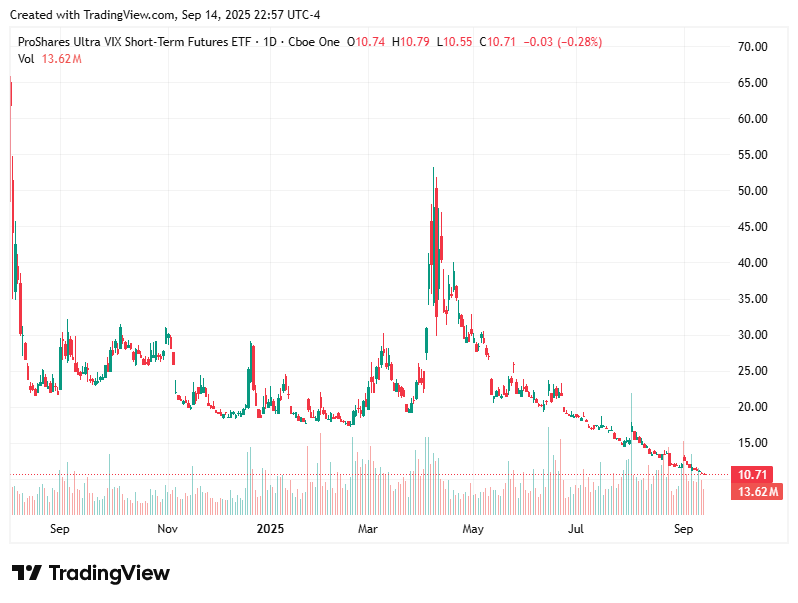
To truly understand the week's schizophrenic market action, we need to dissect the performance of each sector. It’s here, in the trenches of the S&P 500, that the battle between bulls and bears was most visible.
Information Technology: The Oracle Has Spoken
The tech sector was the undisputed king this week, largely thanks to one single, monumental event: Oracle’s (ORCL) jaw-dropping earnings report. The stock rocketed up an incredible 32.24% for the week, closing at $307.86. This wasn't just a beat; it was a statement. Oracle, a company some had written off as an "old tech" stalwart, proved it is a formidable force in the cloud computing wars. The company’s strong guidance and blowout results in its cloud infrastructure division sent a wave of euphoria through the sector, reminding everyone that the AI and cloud narrative is far from over. This single-handed performance by Oracle was a major catalyst for the Nasdaq's record-setting run.
Micron Technology (MU) also had a fantastic week, surging 14.62% to close at $150.57. The semiconductor space has been hot all year, fueled by the insatiable demand for chips to power everything from AI data centers to the latest consumer gadgets. Micron's rally suggests that investors are increasingly confident about the memory market's recovery and pricing power. This is a bellwether for the entire tech hardware ecosystem, and its strength is a very positive sign.
Of course, the sector's giants, Apple (AAPL) and Microsoft (MSFT), played their part. While their weekly gains weren't as explosive as Oracle's, their sheer size means any upward movement has a massive impact. Microsoft added 1.77% on Friday alone, closing at $509.90. Apple, despite a rougher week overall (down -4.03%), managed to claw back 1.76% on Friday to finish at $234.07. The resilience of these two titans, even on a mixed day, highlights their status as the market's bedrock. Investors simply trust them to continue delivering, quarter after quarter.
However, it wasn't all sunshine and rainbows. The Trade Desk (TTD) got absolutely hammered, plummeting 13.12% for the week to close at $45.24. This is a cautionary tale in the high-growth ad-tech space. Any sign of slowing growth or increased competition can lead to a brutal repricing, and TTD investors felt that pain acutely. Similarly, HP Inc. (HPQ) continued its struggle, dropping 3.41%. The PC market remains a tough slog, and HPQ seems to be bearing the brunt of the post-pandemic slowdown.
Another interesting gainer was CalAmp (CAMP), a smaller player in the IoT and telematics space. The stock exploded, gaining 82.89% to close at $2.78. While this is a low-priced stock with high volatility, such a massive move often points to specific company news or a sudden surge in retail interest. It's a reminder that incredible gains can still be found in the less-traveled corners of the tech world, though the risks are proportionally higher.
Consumer Discretionary: The Tesla Show and China's Rebound
This sector was a story of extremes. On one side, you had Tesla (TSLA) putting on an absolute clinic. The electric vehicle maker surged an eye-watering 7.36% on Friday, capping a week where it gained 12.9% to close at $395.94. Whatever your opinion on Elon Musk, you cannot deny the stock's incredible momentum. Positive delivery numbers, new product announcements, or even just a shift in sentiment can send this stock flying. It was the primary force lifting the consumer discretionary sector into positive territory for the day.
On the other side of the coin, you had a retail bloodbath. RH (formerly Restoration Hardware) (RH) cratered, losing 9.12% for the week. The high-end furniture market is extremely sensitive to economic sentiment and housing market trends, and this steep drop suggests investors are worried about the affluent consumer's willingness to spend. Target (TGT) also showed weakness, falling 1.77%. While not as dramatic, it points to the persistent pressures facing big-box retailers, from margin compression to intense competition. And even the mighty Amazon (AMZN) wasn't immune, slipping 1.02% for the week to $229.95. When Amazon shows weakness, it's a clear signal that the broader consumer environment is facing headwinds.
The most fascinating part of this sector's story, however, came from China. Chinese consumer and e-commerce stocks posted monster gains. MOGU Inc. (MOGU), a fashion e-commerce platform, led the charge with a mind-boggling 85.14% gain. GoPro (GPRO), while not Chinese, often has its fate tied to manufacturing and consumer sentiment in the region and saw a 34.23% surge. Baozun (BZUN), which helps brands with their e-commerce operations in China, jumped 24.58%. And the giants, Alibaba (BABA) and JD.com (JD), were up 14.65% and 9.38% respectively.
This synchronized rally in Chinese tech and consumer names is significant. For months, these stocks have been languishing under the weight of regulatory crackdowns and economic uncertainty. This week's powerful rebound could be a signal that the worst is over. Perhaps investors are starting to believe that the Chinese government is easing its grip and that the consumer economy there is finally turning a corner. If this is the beginning of a sustained recovery in Chinese equities, it could be one of the biggest investment stories of the next year.
GameStop (GME) also made the list, climbing 9.91%. The original meme stock continues to be a battleground, with its price action often detached from fundamentals. Its inclusion this week is a reminder that the retail army is still a force to be reckoned with.
Healthcare: A Sector Under Siege
The healthcare sector was, without a doubt, the week's biggest loser, closing down 1.1% on Friday. The pain was widespread and came from multiple directions.
The COVID-19 vaccine stocks, once the darlings of the market, faced a political firestorm. A report from The Washington Post suggested that health officials from the previous administration were planning to link COVID vaccines to a number of child deaths. This news sent shockwaves through the vaccine manufacturers. Moderna (MRNA) plunged 7.40% on Friday, and Pfizer (PFE) dropped 3.90%. This highlights the immense headline risk these companies face. Their fortunes are not just tied to science and sales, but to the shifting winds of politics and public opinion.
The biotech space was also a house of pain. The iShares Biotechnology ETF (IBB) slumped 2.0% on Friday, indicating broad-based weakness. This is a risk-off move. When investors get nervous, they tend to sell their more speculative biotech holdings first. Array BioPharma (ARRY) was a notable loser, falling 12.49% for the week. The cannabis-related healthcare stocks also took a hit, with Tilray (TLRY) down 10.92% and Canopy Growth (CGC) down 4.79%. The path to profitability and regulatory clarity in the cannabis sector remains long and fraught with peril.
However, there was a massive silver lining in the managed care space. Centene Corp (CNC) was the week's biggest gainer in the healthcare sector, soaring an incredible 17.6%. This was likely driven by optimism about government reimbursement rates and the company's positioning within the Medicaid and Obamacare marketplaces. UnitedHealth Group (UNH), a true behemoth of the industry, also posted a huge gain of 12.12%, closing at $353.61. The strength of these two giants suggests that while sentiment is sour on biotech and vaccine stocks, investors are very bullish on the health insurance and managed care business model. It's a flight to quality and predictable cash flows within a battered sector.
In other news, Humacyte (HUMA) filed for a $350 million mixed securities shelf offering. This is a common move for biotech companies to raise capital for research and development. While it can be dilutive to existing shareholders in the short term (the stock was down slightly), it's a necessary step to fund the long and expensive process of drug discovery. ACADIA Pharmaceuticals (ACAD) published positive real-world data for its Rett syndrome treatment, DAYBUE. While the stock (ACAD) didn't react much, this kind of data is crucial for long-term adoption and sales growth.
Materials and Industrials: Precious Metals Shine, Old Economy Stumbles
The materials sector was another area of notable strength, driven almost entirely by a surge in precious metals prices. As uncertainty creeps into the market and with a Fed rate cut on the horizon, investors are once again turning to gold and silver as a safe haven and a hedge against potential inflation.
This was clearly reflected in the performance of mining stocks. Hecla Mining (HL) led the pack, jumping an impressive 23.61% for the week. Americas Gold and Silver (AG) followed with a 13.55% gain, and First Majestic Silver (FSM) rose 9.91%. Even the major gold producer Gold Fields (GFI) saw a healthy 9.49% increase. This is a classic "risk-off" trade. The strength in miners is a barometer of fear in the broader market. When these stocks are rallying, it means smart money is seeking shelter.
However, the more economically sensitive parts of the materials and industrials sectors didn't fare as well. Sherwin-Williams (SHW), a bellwether for the housing and construction markets, slipped 1.01%. Freeport-McMoRan (FCX), a major copper producer, was down 0.91%. Copper is often called "Dr. Copper" because its price is seen as a proxy for global economic health. A dip in FCX, even a small one, hints at concerns about a potential economic slowdown.
In the industrials space, American Airlines (AAL) dipped 0.99%. Airlines are notoriously sensitive to fuel costs and economic cycles. The slight weakness here aligns with the broader concerns about consumer spending and economic growth that we saw in other sectors.
Communication Services: A Mega-Merger Looms
This sector was dominated by one massive piece of news: the potential acquisition of Warner Bros. Discovery (WBD) by Paramount Skydance (PSKY). The news sent both stocks soaring. WBD jumped an incredible 16.94% on Friday, while PSKY rose 7.62%. This is a blockbuster deal that would reshape the media landscape.
However, a Bloomberg report threw some cold water on the excitement, suggesting the deal will likely face significant regulatory headwinds. This is almost a certainty. The current administration has taken a much tougher stance on large-scale mergers, and a combination of this magnitude would undoubtedly draw intense scrutiny from the Department of Justice and the FTC. Investors in these stocks are betting that the deal will eventually go through, but it's a risky bet with a long and uncertain road ahead.
Elsewhere in the sector, the giants held their ground. Alphabet (GOOG) ticked up 0.21% and Meta Platforms (META) gained 0.62%. Like Apple and Microsoft, their steady performance helped keep the sector in the green.
The News That Moved Markets: Deals, Drama, and Digital Dollars
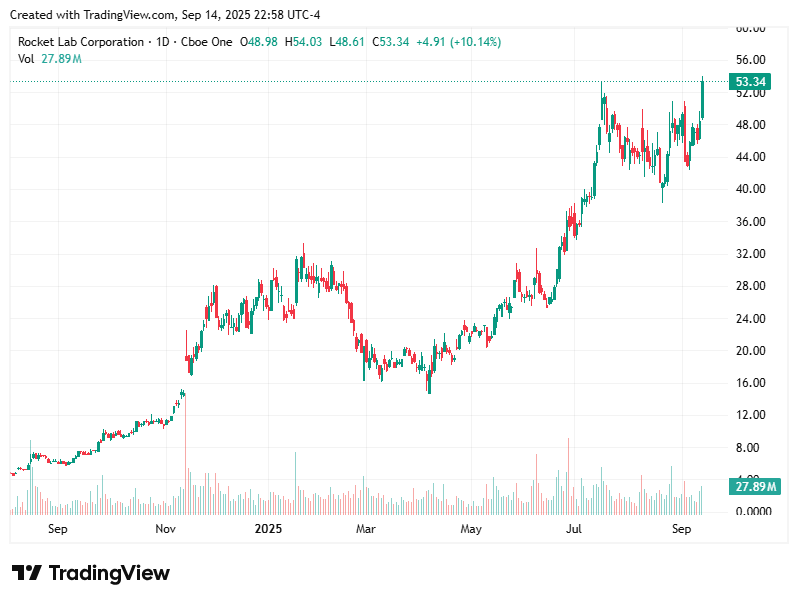
Beyond the sector-level trends, many company-specific news items created significant ripples across the market. These are the stories that offer a glimpse into emerging trends and potential future opportunities.
Crypto and Corporate Strategy: Faraday's Spin-Off and Asset Entities' Bitcoin Bet
The world of cryptocurrency continues to intertwine with the traditional stock market in fascinating ways. Two announcements on Friday highlighted this growing convergence.
First, Faraday Future Intelligent Electric (FFAI), the struggling EV startup, announced a plan to spin off its "crypto flywheel assets" into a separate, publicly traded company. The stock (FFAI) fell on the news, closing down at $1.72. On the surface, this is a bold move to create two distinct entities: one focused on the brutally competitive EV market and another focused on a Web3 strategy. The company claims this will allow for independent capitalization (meaning the crypto arm can raise money without diluting FFAI shareholders) and better operational focus.
However, one has to be skeptical. This feels like a "Hail Mary" pass from a company that has consistently struggled with production delays and financial turmoil. Spinning off a vaguely defined "crypto flywheel" business could be seen as an attempt to financial-engineer some excitement and unlock value from an unproven concept. It reeks of desperation. While the idea of separating the volatile and capital-intensive car business from a potentially high-growth Web3 venture sounds logical, the execution will be everything. For now, this is a story to watch from the sidelines. The risk here is astronomical.
In a much more direct embrace of crypto, Asset Entities (ASST) announced the completion of its merger with Strive and, more importantly, its intention to begin a "Bitcoin accumulation strategy." The company also secured a whopping $750 million in equity financing, with the potential for another $750 million. The stock (ASST) didn't react positively, falling to $8.49. This is a bold and risky pivot. Asset Entities is essentially transforming itself into a pseudo-Bitcoin holding company, similar in strategy to what MicroStrategy (MSTR) has done.
This is a pure, leveraged bet on the price of Bitcoin. If Bitcoin soars, ASST shareholders will likely be rewarded handsomely. If Bitcoin crashes, the company's balance sheet could be decimated. The massive financing deal gives them a huge war chest to buy Bitcoin, but it also introduces significant dilution. This is not an investment for the faint of heart. It is a high-stakes gamble on the future of cryptocurrency, and its success or failure will be tied directly to the volatile price action of a single digital asset.
Corporate Shake-ups and Capital Moves
Friday also brought a flurry of standard, but important, corporate news that is worth noting.
Bank of America (BAC) announced a major leadership overhaul. Alastair Borthwick was named the new CFO, and Dean Athanasia and Jim DeMare were appointed as Co-Presidents. Major leadership changes at a company of this size are always significant. It signals a potential shift in strategy and priorities. For a banking giant like BAC, investors will be watching closely to see how this new team navigates the complex interest rate environment and regulatory landscape.
Ring Energy (REI) saw its CFO, Travis T. Thomas, resign effective immediately. An unexpected C-suite departure is often a red flag for investors. While the company quickly named an interim CFO, the abruptness of the resignation raises questions about potential internal disagreements or problems that have not yet been made public.
Telesat (TSAT) announced a complex equity distribution of its Telesat Lightspeed business. This is a financial structuring move designed to separate the high-growth, capital-intensive Lightspeed satellite internet business from the legacy satellite operations. The goal is likely to unlock value and provide a clearer valuation for the Lightspeed asset, potentially paving the way for future fundraising or a strategic partnership. This is a smart, if complicated, move to highlight the value of their next-generation technology.
A fewcompanies announced share repurchase programs, including Western Alliance Bancorp (WAL) with a $300 million authorization and SUI Group Holdings (SUIG) with a $50 million program. Buybacks are generally seen as a shareholder-friendly move. It indicates that management believes the stock is undervalued and is a tax-efficient way to return capital to investors. These announcements are a vote of confidence from the companies themselves.
On the other hand, Osisko Development Corp. (ODV) and OmniAb (OABI) filed for large common stock offerings by selling shareholders. This means existing large investors are looking to cash out some of their positions. This can create downward pressure on a stock as the market absorbs the new supply of shares.
Alliance Laundry Systems (ALH) filed its IPO prospectus. The maker of commercial laundry equipment is coming to the public markets. This will be an interesting one to watch. It’s a classic industrial "old economy" business, and its performance as a public company could be a good barometer for the health of the broader economy.
Finally, Lifeway Foods (LWAY) announced the completion of the first stage of a major production capacity expansion. The stock rallied on the news, closing at $33.42. This is a great example of a company investing in growth. The demand for their kefir and other functional dairy products is clearly strong, and they are spending capital to meet that demand. This is exactly what growth investors like to see.
Growth Stocks to Watch: Riding the Waves of Change
Based on the week's news and market action, these companies stand out as potential growth opportunities. These are not recommendations, but rather ideas for further research based on the trends we've identified.
Oracle (ORCL): The Reawakened Giant
Thesis: The market has fundamentally re-evaluated Oracle. Its massive 32% jump wasn't just a one-day pop; it was a repricing based on the undeniable success of its cloud infrastructure business (OCI). For years, the narrative was that Oracle was losing the cloud war to Amazon's AWS, Microsoft's Azure, and Google Cloud. This quarter proved that Oracle is not just competing; it's winning significant enterprise deals, particularly in the AI space. Companies are looking for a second or third cloud provider to avoid lock-in, and Oracle's high-performance database legacy gives it a unique advantage.
Statistics: Ticker: ORCL, Price: $307.86, Weekly Gain: +32.24%.
Why it's a Growth Stock: The growth story here is the continued expansion of OCI. The total addressable market for cloud computing is still growing at a rapid pace. If Oracle can continue to take market share, its revenue growth will accelerate, leading to further multiple expansion. At this point, betting against their cloud momentum seems unwise. The stock is no longer "cheap," but paradigm-shifting quarters like this often mark the beginning of a new, long-term growth phase, not the end.
UnitedHealth Group (UNH): The Unstoppable Cash Machine
Thesis: In a week where the healthcare sector was brutalized, UNH stood tall, posting a massive 12% gain. This demonstrates its "best-in-breed" status and its appeal as a defensive growth stock. The business model is simple but powerful: collect premiums, manage healthcare costs through its vast network and Optum subsidiary, and generate enormous, predictable cash flows. The population is aging, healthcare spending is non-discretionary, and UNH is the largest and most efficient operator in the space.
Statistics: Ticker: UNH, Price: $353.61, Weekly Gain: +12.12%.
Why it's a Growth Stock: Growth comes from multiple avenues: premium increases, membership growth in its Medicare Advantage plans (a huge demographic tailwind), and the relentless expansion of its Optum health services division, which uses data and technology to improve outcomes and lower costs. The recent weakness in other parts of the healthcare sector may drive more institutional money into the perceived safety and reliable growth of UNH.
Alibaba (BABA): The China Recovery Play
Thesis: This is a higher-risk, higher-reward idea. After years of being punished by regulatory crackdowns and a slowing economy, Chinese tech stocks showed a powerful spark of life this week. Alibaba, as the e-commerce and cloud leader in China, is the primary way to play a potential recovery. The stock is still incredibly cheap on a fundamental basis compared to its U.S. peers. If the political environment in China is truly becoming more pro-business and the consumer is starting to spend again, the upside for BABA could be substantial.
Statistics: Ticker: BABA, Price: $155.44, Weekly Gain: +14.65%.
Why it's a Growth Stock: The growth story is twofold. First, a cyclical recovery in Chinese consumer spending would directly boost its core e-commerce business. Second, the long-term structural growth of cloud computing in China is still in its early innings. Alibaba Cloud is the dominant player. The 14.65% weekly gain could be the first sign that institutional investors are willing to dip their toes back into this beaten-down market. This is a bet on a macro turnaround in the world's second-largest economy.
Hecla Mining (HL): The Precious Metals Proxy
Thesis: The surge in precious metals miners is a direct reflection of market uncertainty and the anticipation of Fed rate cuts. Rate cuts lower the opportunity cost of holding non-yielding assets like gold and silver, often boosting their prices. Hecla Mining, as a primary silver producer, offers leveraged exposure to this trend. If you believe that market volatility will continue and that the Fed is about to embark on an easing cycle, mining stocks like HL are a logical place to look.
Statistics: Ticker: HL, Price: $11.15, Weekly Gain: +23.61%.
Why it's a Growth Stock: The "growth" here is tied to the price of the underlying commodity. A mining company's profitability explodes when metal prices rise, as their operational costs are relatively fixed. The 23% rally this week is the market pricing in this potential for massive margin expansion. This is a cyclical growth play, a hedge against market turmoil and a bet on a dovish Federal Reserve.
Overall Market Forecast: The Eye of the Hurricane
The market feels like it’s in the eye of a hurricane. The rally on Thursday and the mega-cap strength on Friday created a pocket of calm, but the storm clouds are gathering on the horizon, and the name of that storm is "FOMC."
Short-Term Forecast (1-4 Weeks): Volatile and Fed-Dependent
The immediate future of the market rests squarely on the shoulders of Jerome Powell. Here’s how it could play out:
The Dovish Scenario (Bullish): The Fed cuts rates by 25 basis points as expected. Crucially, the dot plot continues to show a consensus for three total cuts by the end of the year. In his press conference, Powell emphasizes the progress on inflation and expresses a willingness to act further to support the economy, which is showing signs of slowing (as evidenced by the weak University of Michigan Consumer Sentiment data). In this scenario, the market breathes a collective sigh of relief. The rally broadens out from the mega-caps to include small- and mid-cap stocks. The Russell 2000 (IWM) would likely outperform, and the beaten-down cyclical sectors would catch a strong bid. We could see the S&P 500 make a decisive break above the 6,600 level.
The Hawkish Scenario (Bearish): The Fed cuts rates by 25 basis points, but this is where the good news ends. The dot plot is revised, showing that fewer governors now expect three cuts this year. The median projection shifts to just two cuts. Powell's press conference is cautious. He might mention that while inflation has improved, services inflation remains sticky, and the labor market is still tight. He could use phrases like "data-dependent" and "we are not on a pre-set course," which the market would interpret as him pushing back against the idea of a full-blown easing cycle. This would be a major disappointment. Treasury yields would likely jump, particularly the 2-year yield. The mega-cap growth stocks, whose high valuations are justified by low interest rates, would be hit hard. We could see a swift and sharp pullback of 5-10% in the Nasdaq and S&P 500 as the market reprices its rate expectations.
The Most Likely Scenario (Mixed and Messy): The Fed cuts by 25 basis points. The dot plot is slightly ambiguous, maybe showing a close split between two and three cuts. Powell tries to walk a tightrope in his press conference, acknowledging slowing growth but also reiterating the need to remain vigilant on inflation. This "have your cake and eat it too" message would likely lead to a choppy, volatile market. Investors would be left confused, with bulls and bears finding things to support their respective cases. In this environment, the current trend of mega-cap outperformance might continue, as investors cling to the perceived safety of the largest companies while shunning more economically sensitive areas of the market.
Long-Term Forecast (6-12 Months): Cautiously Optimistic
Looking out to the end of the year and into 2026, the picture becomes a bit clearer, and I lean cautiously optimistic. The fact is, the Federal Reserve is now in an easing cycle. The debate is about the pace, not the direction. Lower interest rates are, historically, a tailwind for equity prices.
The economy is slowing, but it doesn't appear to be falling off a cliff. The weak consumer sentiment numbers are a concern, but as long as the labor market remains relatively stable, a deep and protracted recession seems unlikely. We are more likely heading for a period of slower growth, which is exactly the kind of "soft landing" environment the Fed has been aiming for.
In this environment, corporate earnings will become paramount. The mega-cap tech companies have proven their resilience, but the real test will be whether the rest of the market can deliver. If we see earnings growth stabilize and begin to re-accelerate in the broader market, it would provide the fundamental support needed for a more sustainable and inclusive rally.
The bifurcation we are seeing now—with mega-caps soaring and everything else lagging—is not healthy long-term. A sustainable bull market needs broad participation. The key catalyst for this will be confirmation from the Fed that they are truly done with tightening and are committed to supporting the economy. If we get that signal next week, it could set the stage for a strong end to the year. If not, we could be in for a rocky and frustrating autumn.
Prepare for volatility, keep an eye on the bond market (the 2-year and 10-year yields will tell you everything you need to know about the Fed's message), and remember that in a market this divided, stock selection is more important than ever.
Final Disclaimer: This newsletter contains forward-looking statements and opinions that are subject to change without notice. All investment strategies and investments involve risk of loss. Nothing contained in this document should be construed as investment advice. Any reference to an investment's past or potential performance is not, and should not be construed as, a recommendation or as a guarantee of any specific outcome or profit. You are responsible for your own investment decisions.
Follow Stock Region on Instagram | Connect with us on Telegram | Visit our Website
© 2025 Stock Region. All Rights Reserved.