

Stock Region Market Briefing: A Day of Contradictions and High Stakes
The stocks featured in this report were previously delivered in our trading room in real-time. To access Stock Region’s real-time trade ideas, then be sure to purchase a membership now.

Disclaimer: This newsletter is for informational and entertainment purposes only. It is not financial advice. The content provided is based on publicly available information and represents the opinions of the author. All investment decisions should be made with the guidance of a qualified financial professional. Investing in the stock market involves risk, and past performance is not indicative of future results. Stock Region and its writers are not responsible for any financial losses or gains you may experience.
Well, that was a day. Wednesday, September 24, 2025, felt like the market couldn’t quite make up its mind. We saw a push-and-pull between bullish enthusiasm and cautious profit-taking, a dizzying dance of conflicting economic signals, and some truly explosive single-stock stories that remind us why we love this game. After a bit of a retreat yesterday, the market tried to find its footing, but it was a wobbly effort. The S&P 500, Nasdaq, and Dow all flirted with gains and losses, ultimately ending the day in a state of indecision.
The big story continues to be the tension between the unstoppable force of the AI narrative and the immovable object of high valuations and macroeconomic uncertainty. Fed Chair Powell’s recent comments that stocks are “fairly highly valued” are still echoing in the trading pits, making investors a little jumpy. While the “buy the dip” mentality has been the winning strategy all year, especially for the mega-cap tech darlings, we saw that conviction waver today.
On one hand, you had blockbuster news from the likes of Alibaba (BABA) and the OpenAI/Oracle (ORCL) “Stargate” project, which should have sent tech stocks soaring. On the other, you had a disappointing reaction to a stellar earnings report from Micron (MU) and a general sense of fatigue in the semiconductor space. It’s a classic case of “what have you done for me lately?” The market seems to be saying, “Great news, but is it great enough to justify these prices?”
The economic data threw us another curveball. A shockingly strong New Home Sales report for August blew expectations out of the water, suggesting the consumer is still alive and kicking, especially at the high end. But the homebuilder stocks themselves? They shrugged. This tells a story of a market grappling with cognitive dissonance: good news isn’t always being treated as good news.
Today, we’re going to unpack all of this and more. We’ll dig into the lithium sector’s shocking rally, the heartbreak in the pharma world, the perplexing action in homebuilders, and the undercurrents in the bond and commodity markets. We’ll also look ahead at the forecast and identify some growth stocks that are making moves worth watching. So grab your coffee (or something stronger), settle in, and let’s make sense of a truly fascinating day on Wall Street.
Cautious Optimism Tempered by Reality
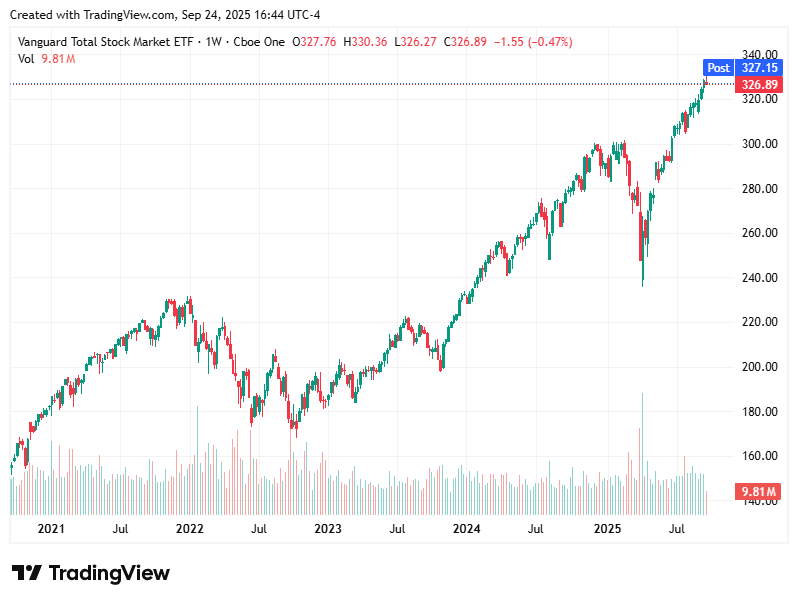
As we head into the final quarter of 2025, the market is at a fascinating crossroads. Our forecast remains one of cautiously managed optimism, but the emphasis is shifting more heavily toward “cautious.”
The bull case is clear and powerful: the AI revolution is not a fad. The trillions of dollars being poured into infrastructure by giants like Alibaba (BABA), Oracle (ORCL), OpenAI, and NVIDIA (NVDA) are real. This technological shift will create immense value and drive earnings growth for years to come. The productivity gains are just beginning to be realized, and companies that are either enabling this revolution (like the chipmakers) or effectively leveraging it (like the software and cloud giants) will continue to command premium valuations. We’ve also seen a resilient consumer, particularly in the upper-income brackets, as evidenced by today’s stellar new home sales data. This suggests that while there may be pockets of weakness, the economic engine hasn’t stalled.
However, the bear case is gaining traction and cannot be ignored. Valuations, as Fed Chair Powell pointedly noted, are stretched. The S&P 500 is trading at a significant premium to its historical average, and the “Magnificent Seven” are priced for perfection. Any hiccup in their growth story, as we saw with the muted reaction to Micron’s (MU) strong earnings, can lead to swift and sharp pullbacks.
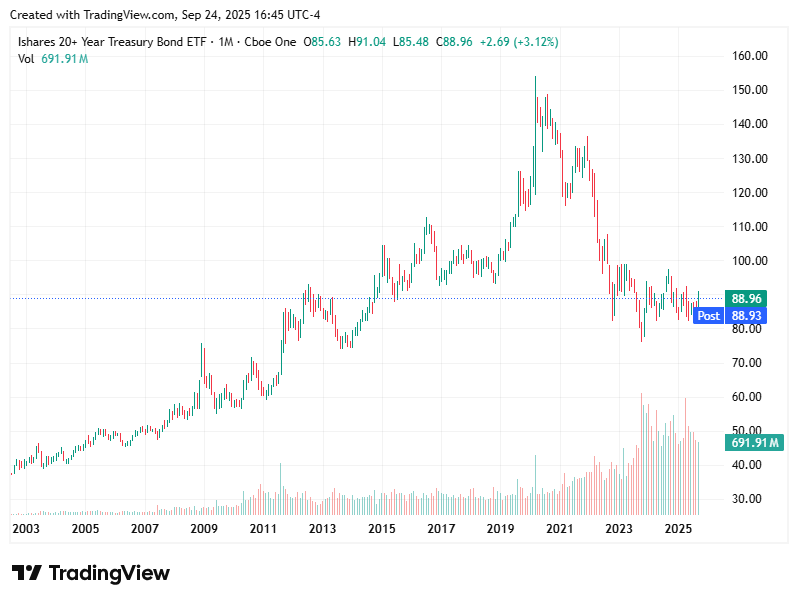
The bond market is sending warning signals. Yields are creeping up again, with the 5-year Treasury hitting a three-week high. Chicago Fed President Goolsbee threw cold water on the idea of a series of rate cuts, and weak business sentiment in economic powerhouses like Germany suggests global headwinds are strengthening. A strong U.S. Dollar Index (climbing 0.6% to 97.88 today) also creates problems for multinational corporations’ earnings.
So, what does this mean for our strategy? I believe we are entering a “stock picker’s market.” The days of broad index-based gains may be numbered for the short term. The easy money has been made. Now, the focus must shift to quality, profitability, and specific catalysts. The market will likely continue to grind higher, but with increased volatility and more pronounced sector rotations. Expect more days like today, where the overall indices are flat, but beneath the surface, there are massive winners and losers.
Growth is still the name of thegame, but it must be growth at a reasonable price (GARP). Investors should be looking for companies with clear, defensible moats, strong balance sheets, and a proven ability to execute. The AI theme remains dominant, but the focus may shift from the primary beneficiaries (like NVDA) to secondary and tertiary players that are integrating AI to disrupt their respective industries.
In summary, I am not calling for a bear market, but I am advising a more discerning and tactical approach. The bull run isn’t over, but it’s maturing. The path forward will be less of a straight line up and more of a challenging climb with some switchbacks. We will see pullbacks, and those will be buying opportunities for the well-prepared investor who has done their homework.
Market-Moving Stories and Deep Dives
The Lithium Gold Rush: A Political Spark Ignites a Firestorm
Today was an absolutely electric day for the lithium sector, and it all came down to one explosive headline. Last night, a Reuters report dropped a bombshell: the Trump administration is reportedly seeking an equity stake of up to 10% in Lithium Americas (LAC). The stock responded with a jaw-dropping surge, closing up a staggering 95.77% at $6.02.
This isn’t just about one company; it’s a massive geopolitical statement. The government is renegotiating the terms of a $2.26 billion loan from the Department of Energy for LAC’s Thacker Pass project in Nevada, which is being developed in partnership with General Motors (GM). By seeking an equity stake, the government is signaling a desire for direct involvement in securing a domestic supply chain for critical minerals. This is a strategic imperative. The United States is desperately trying to reduce its reliance on China, which currently holds a vise-grip on the global lithium processing and battery production market.
The Thacker Pass mine is the crown jewel in this strategy. When it becomes fully operational around 2028, it is poised to be the largest lithium source in the entire Western Hemisphere. Having the U.S. government as a direct shareholder not only de-risks the project financially but also provides a powerful political tailwind, fast-tracking permits and clearing regulatory hurdles. This move is reminiscent of the government’s strategic investments in companies like Intel (INTC) for semiconductor independence and MP Materials (MP) for rare earth elements. It’s a clear message: national security and economic security are intertwined, and lithium is at the heart of it.
The ripple effect was immediate and powerful. A tide of speculative buying lifted all lithium boats.
Standard Lithium (SLI) rocketed up 18.92% to $3.42.
Lithium Argentina (LAR) jumped 8.28% to $3.46.
Sigma Lithium (SGML) gained a solid 6.89% to $6.52.
Even the established giants got a piece of the action, with Albemarle (ALB) rising 3.49% and Sociedad Química y Minera (SQM) adding 2.26%.
This is a paradigm shift for the domestic lithium industry. For years, these companies have been battling permitting hell, financing challenges, and the sheer dominance of Chinese competitors. Government backing of this magnitude changes the entire calculus. The risk profile for projects like Thacker Pass has been dramatically reduced. While LAC’s monumental jump today might feel like you’ve missed the boat, the broader theme is just getting started. The U.S. is going to pour billions, if not trillions, into onshoring critical supply chains, and lithium is at the top of the list.
Growth Stocks to Watch in this Sector:
Lithium Americas (LAC): The direct beneficiary. The stock has run hard, and some profit-taking is inevitable. However, with government backing and a world-class asset, any significant pullback should be seen as a buying opportunity for long-term investors who can stomach the volatility. The validation is immense.
Standard Lithium (SLI): SLI is another key player in the American lithium space, focusing on projects in Arkansas. The news about LAC lends credibility to the entire domestic sector, making SLI’s projects look more attractive and potentially next in line for government support. Today’s pop was significant, but its market cap is still a fraction of the big players, offering substantial upside if they can successfully execute on their resource development. They also released positive news today about a maiden inferred resource at their Franklin Project in Texas, which showed the highest reported lithium-in-brine grades in North America. This is a company firing on all cylinders.
Albemarle (ALB): The established behemoth. ALB won’t give you the explosive returns of a junior miner, but it’s a safer way to play the trend. As the tide lifts all boats, the industry leader with proven production and a global footprint stands to benefit from higher lithium prices and increased strategic importance. It’s the blue-chip growth play in a wildcat sector.
Healthcare’s Heartbreak and Hope: A Tale of Two Trials
The biotech sector delivered a brutal lesson in risk and reward today. It was a day of stark contrasts, with one company soaring to unimaginable heights on positive trial data while another was utterly decimated by failure.
The undisputed champion of the day was uniQure (QURE). The stock was halted for most of the session, but when it resumed trading, it was like a rocket launch. It closed up an unbelievable 241% at $46.58. The reason? “Positive” is an understatement for their topline results from the Phase I/II study of AMT-130, a gene therapy for Huntington’s Disease.
Huntington’s is a devastating, fatal neurodegenerative disorder with no cure. uniQure’s data showed that its high-dose treatment resulted in a statistically significant 75% slowing of disease progression at 36 months. Let that sink in. For patients and families facing this cruel disease, this is the kind of news they have been praying for. The study met its primary endpoint and a key secondary endpoint, showing a 60% slowing of disease progression as measured by Total Functional Capacity. The therapy was also generally well-tolerated. To top it off, the company secured a $175 million non-dilutive loan facility, giving it a strong financial runway to move forward. This is a monumental breakthrough, not just for uniQure, but for the entire field of gene therapy.
On the other side of the coin, we have Acadia Pharmaceuticals (ACAD) and Harmony Biosciences (HRMY), both of which delivered gut-wrenching news.
Acadia (ACAD) saw its stock plummet 8.39% to $21.62 after announcing that its Phase 3 trial of intranasal carbetocin for hyperphagia (an insatiable hunger) in Prader-Willi Syndrome (PWS) failed to meet its primary endpoint. PWS is another rare and difficult genetic disorder, and hopes were high. The failure to show a statistically significant improvement over placebo is a major blow to the company and the patient community. The company’s CEO tried to put a brave face on it, pointing to their approved products and robust pipeline, but there’s no sugarcoating a Phase 3 failure.
Similarly, Harmony Biosciences (HRMY) took a beating, with its stock falling 15.53% to $27.09. The company’s Phase 3 study of ZYN002 for Fragile X Syndrome, another rare neurobehavioral condition, also failed to meet its primary endpoint. The culprit? A higher-than-expected placebo response. This is a common and frustrating challenge in clinical trials for neurological and psychiatric disorders, where subjective endpoints can be tricky to measure. For investors, it’s a painful reminder that even promising science can be derailed by the complexities of clinical trial design.
Today was a vivid illustration of the binary nature of biotech investing. The potential for life-changing gains is real, as uniQure shareholders discovered. But the risk of catastrophic loss is equally real. This is not a sector for the faint of heart. It requires deep due diligence, a long-term perspective, and an iron stomach.
For every QURE, there are a dozen ACADs and HRMYs. That said, the uniQure news is a beacon of hope. It shows that gene therapy, after years of promise and setbacks, is finally starting to deliver on its potential to tackle some of the most intractable diseases known to medicine.
Growth Stocks to Watch in this Sector:
uniQure (QURE): While it has already had its massive pop, QURE is now a company with a potentially revolutionary, de-risked asset for a disease with a massive unmet need. The path to market is still long, but the biggest hurdle—proving efficacy—has been cleared. Any consolidation or pullback in the coming weeks could present a strategic entry point for investors with a high-risk tolerance looking for exposure to cutting-edge gene therapy. This could be a multi-billion dollar drug.
PTC Therapeutics (PTCT): Mentioned as a related stock, PTCT also has a focus on rare diseases and gene therapy. While not directly impacted by the QURE news, the success of a complex gene therapy trial for a neurological disorder can create a positive sentiment halo for other companies in the space. PTCT has its own pipeline and catalysts, and the validation of this therapeutic approach could draw more investor attention to the entire sub-sector.
Cidara Therapeutics (CDTX): This mid-cap gainer flew a bit under the radar today but had fantastic news. It popped 20.96% to $88.89 after announcing an accelerated timeline for its Phase 3 trial of CD388, a flu prevention candidate. Following a meeting with the FDA, they can start the trial six months early, just in time for the 2025 flu season. Even better, a single successful Phase 3 trial might be enough for approval. This significantly shortens the timeline to potential revenue and de-risks the asset. It’s a prime example of a company executing flawlessly on the regulatory front, a key driver of value in biotech.
The Housing Market Paradox: Great Data, Tepid Stocks
The economic calendar served up a genuine head-scratcher today. The August New Home Sales report came in scorching hot, surging 20.5% month-over-month to a seasonally adjusted annual rate of 800,000 units. This wasn’t just a beat; it obliterated the consensus forecast of 650,000 and marked the strongest pace since January 2022.
The report’s internals were just as impressive. The surge happened before the larger drop in mortgage rates we saw in September, suggesting a fundamental strength in demand. Most notably, there was a significant jump in sales of homes priced over $800,000. This tells us two things: first, the wealth effect is real. The roaring stock market has given high-end buyers the confidence and the capital to make big-ticket purchases. Second, falling mortgage rates and builder incentives are successfully luring buyers off the sidelines.
So, with such unequivocally fantastic news, the homebuilder stocks must have soared, right? Wrong. The iShares U.S. Home Construction ETF (ITB) traded modestly, and the broader SPDR S&P Homebuilders ETF (XHB) actually closed down 0.5%. Individual names like Lennar (LEN) and PulteGroup (PHM) saw modest bounces but nothing spectacular. What gives?
The market, in its infinite and often frustrating wisdom, is looking ahead. Investors are weighing this brilliant backward-looking data point against more worrisome forward-looking indicators. Last week, data showed that permits for future single-family home construction dropped to two-year lows. This suggests builders themselves are anticipating a slowdown. They are pulling back on starting new projects, which is not a sign of confidence.
The fear is that this August sales spike might be a temporary sugar high. It could be driven by aggressive builder incentives and discounting to move a glut of unsold new houses. In essence, builders might be sacrificing margin to clear inventory before a potential slowdown hits. The market is worried that today’s strong sales were “pulled forward” from future months, and that a lull is coming.
We believe the market’s caution is warranted but perhaps a little overblown. The narrative of a housing market crash has been proven wrong time and time again. The simple fact is that there is a chronic undersupply of housing in the United States, and demographic trends (millennials entering prime home-buying years) provide a powerful, long-term tailwind.
While rising rates and affordability challenges are real headwinds, the builders have adapted. They are using incentives, mortgage rate buydowns, and smaller floor plans to meet buyers where they are. The weakness in future permits is a concern, but it also shows that builders are being disciplined, avoiding the overbuilding that led to the 2008 crash. This is a healthier, more sustainable approach. I see the lukewarm reaction as an opportunity. The fundamentals for housing demand remain robust, and the builders are trading at very reasonable valuations.
Growth Stocks to Watch in this Sector:
D.R. Horton (DHI): As the nation’s largest homebuilder, DHI is the bellwether for the industry. They have a masterful grip on the entry-level and first-time buyer market, which is the largest segment of demand. Their scale gives them immense purchasing power, helping them manage costs in an inflationary environment. They are experts at flexing their product and incentives to match market conditions. With the stock trading well off its highs, it presents a compelling value and growth proposition.
Lennar (LEN): LEN is another titan of the industry, known for its “Everything’s Included” approach that simplifies the buying process. They have a strong focus on technology and operational efficiency. What makes LEN particularly interesting is their strong balance sheet and their strategic moves into multifamily and single-family rentals, which provides a diversified revenue stream that is less sensitive to the mortgage rate cycle.
NVR, Inc. (NVR): NVR is the contrarian’s choice. They have a unique and highly efficient business model where they don’t engage in land development. Instead, they secure options to buy finished lots from developers, which dramatically reduces their capital risk. This asset-light model allows them to generate incredible returns on capital and maintain profitability even in downturns. The stock price looks eye-popping, but on a valuation basis, it’s often more reasonable than its peers. It’s a quality-first play for the discerning investor.
Tech Tremors: AI Enthusiasm Meets Valuation Reality
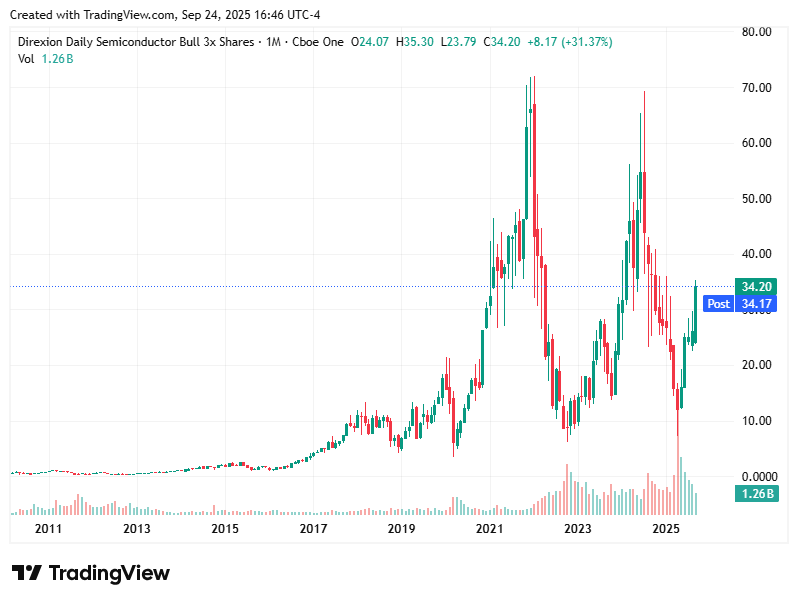
The technology sector was a battlefield of conflicting narratives today. The day started with a tidal wave of bullish AI news, yet the Technology Select Sector SPDR Fund (XLK) ended down nearly 1%. The PHLX Semiconductor Index (SOX) also deepened its recent reversal from a record high.
Let’s start with the good news. Alibaba (BABA) was a major bright spot, surging over 9% pre-market and closing up 8.94% after unveiling its ambitious roadmap for next-generation AI. At its Apsara Conference, the Chinese tech giant announced it would move forward with a massive RMB 380 billion (roughly $52 billion) investment plan in AI and cloud infrastructure over the next three years. They are doubling down on their open-source Qwen language models, aiming to make them the “operating system of the AI era.” This is a huge statement of intent and shows that the global AI arms race is not just a U.S. affair.
Then came the “Stargate” announcement. Oracle (ORCL), OpenAI, and SoftBank (SFTBY) revealed a massive expansion of their AI infrastructure partnership, adding five new U.S. data center sites. This project now involves a staggering $400 billion in investment over the next three years, with a goal of hitting $500 billion by the end of 2025. This is the physical manifestation of the AI revolution—a build-out of unprecedented scale.
Yet, despite this flood of positive long-term news, the market’s reaction was lukewarm at best. Oracle (ORCL), a key partner in this monumental project, actually fell 3.69%. This speaks volumes about the market’s current mindset. The narrative is no longer just “AI is good.” It’s “AI is good, but how much am I paying for it?”
The poster child for this sentiment was Micron (MU). After the bell yesterday, Micron delivered a fantastic earnings report. They beat EPS expectations by a wide margin ($0.17) and issued Q1 guidance that was well above consensus. This is a company at the heart of the AI build-out, providing the essential memory chips (DRAM and NAND) that these massive data centers need. The stock initially jumped 5% in after-hours trading. But by the time the closing bell rang today, it had reversed course and ended down 4.09%. This is a classic “sell the news” reaction. The stock had already surged over 100% in September, and investors decided to lock in those spectacular gains rather than push it higher.
This profit-taking sentiment spread across the chip sector. NVIDIA (NVDA) slipped 1.3%, falling back below its 50-day moving average. Lam Research (LRCX) dropped nearly 3%. Even high-flyers like Palantir (PLTR) fell 2.4%. It seems investors are taking a breather, reassessing the landscape after a historic run.
This is a healthy and necessary correction. The tech sector, particularly semiconductors, has been on an absolute tear. A pullback to digest the gains and shake out the weak hands is not a sign of a broken trend, but a feature of a healthy bull market. The long-term thesis remains firmly intact. The demand for AI infrastructure is not going away; in fact, the Stargate announcement proves it’s accelerating.
However, the easy money has been made. From here on, stock selection will be crucial. Not all AI players are created equal. The market will begin to differentiate between the companies with real, sustainable earnings power and those that are just riding the hype wave. The downgrade of Adobe (ADBE) by Morgan Stanley today (sending the stock down 3.25%) is a case in point. The market is starting to ask tougher questions about competition and growth prospects, even for established leaders.
Growth Stocks to Watch in this Sector:
Marvell Technology (MRVL): While other chip stocks faltered, MRVL soared 8.31% today. The reason? A massive vote of confidence from their own board. The company announced a new $5 billion stock repurchase program and a $1 billion accelerated share repurchase (ASR). This is a powerful signal. Management believes its stock is undervalued and is putting its money where its mouth is. MRVL is a key player in data center networking and custom silicon, making it a critical enabler of the AI infrastructure build-out. While NVDA gets the headlines for GPUs, MRVL provides the essential plumbing that makes these AI factories work. Their strong performance today in a weak tape marks it as a potential leadership stock.
Baidu (BIDU): The “Google of China” had a fantastic day, rising 7% after securing Dubai’s very first autonomous driving trial permit. Their Apollo Go platform will be testing a 50-vehicle fleet on open roads, with plans to expand to over 1,000 driverless vehicles in the next three years. This is a significant international validation of their autonomous driving technology. While Alibaba is making waves in cloud and AI models, Baidu is cementing its leadership in the tangible application of AI to transportation. At its current valuation, it offers a compelling way to play the AI theme with a focus on a different, but equally massive, end market.
Intel (INTC): Yes, Intel. The perennial underdog had a great day, closing up 4.12% and showing signs of life. While it has been a laggard for years, there are glimmers of a turnaround. The government’s focus on domestic chip production (via the CHIPS Act) is a major tailwind. The stock is still incredibly cheap compared to its peers. If CEO Pat Gelsinger can execute on his ambitious turnaround plan and start closing the technology gap with TSMC and Samsung, there is a tremendous amount of room for this stock to run. It’s a high-risk, high-reward value play on the AI theme.
Today was a perfect encapsulation of the market environment we find ourselves in. It was noisy, contradictory, and full of opportunities for those willing to look beneath the surface. While the major indices may have been flat, individual stories of explosive growth and crushing disappointment played out across the board.
The key takeaway is that the market is becoming more discerning. The era of simply buying a tech ETF and watching it go up may be pausing. Now, it’s about digging into the specifics. It’s about understanding the difference between a political catalyst like the one driving Lithium Americas (LAC), a scientific breakthrough like the one at uniQure (QURE), and a smart capital allocation decision like the one at Marvell (MRVL).
As we look ahead to tomorrow, we have a packed economic calendar, including the third estimate of Q2 GDP, durable goods orders, and weekly jobless claims. We also have key earnings reports from companies like Accenture (ACN), CarMax (KMX), and Jabil (JBL), which will give us further insight into the health of the economy and specific industries.
Stay nimble, stay informed, and don’t let the day-to-day noise distract you from your long-term strategy. The undercurrents of technological change and economic realignment are creating incredible opportunities. Our job is to find them.
Disclaimer: The information provided in this newsletter is for educational and informational purposes only and should not be construed as financial or investment advice. The author may or may not hold positions in the securities mentioned. All investment strategies and investments involve risk of loss. Nothing contained in this publication should be construed as a recommendation to buy or sell any security. Always conduct your own research and consult with a licensed financial advisor before making any investment decisions.